Breaking the Stereotype: Why HVAC Needs Women
When you walk onto a job site, it is no secret that you might be the only woman there. For decades, the skilled trades have been a “boys’ club.” But in 2026, the tide is turning.
With the current labor shortage leaving thousands of high-paying jobs unfilled, the industry is waking up to a simple fact: Women in HVAC are not just “diversity hires”—they are essential to the future of the trade.
You might be asking yourself: “Am I strong enough?” or “Will I be respected?”
The answer is yes. Modern HVAC is about brainpower, diagnostics, and customer service—areas where many female technicians excel. Plus, with the gender pay gap in the trades being significantly smaller than in corporate America, it is a smart financial move.
In this guide, we will cover everything you need to know: the physical reality of the job, where to find money for school (Scholarships), and how to get certified fast.
📊 Is HVAC Right For You?
Wondering if you have the technical mindset for the trade? Take a quick aptitude quiz to find out.
Is HVAC Hard for Females? (The Physical Truth)
Let’s address the elephant in the room. HVAC is a physical job. You will be climbing ladders, crawling in attics, and working in the heat.
But do you need to be a bodybuilder? Absolutely not.
It’s About Leverage, Not Brute Force
Male or female, trying to muscle a 200lb compressor up a flight of stairs is a bad idea. Smart technicians use:
- Rope and Pulley systems for rooftop units.
- Hand trucks and dollies for furnaces.
- Leverage rather than back strength for wrenching.
The “Small Hands” Advantage
Ask any veteran tech, and they will tell you: Women in HVAC often have an advantage in tight spaces. Residential furnaces and modern electrical boards are becoming more compact. Having smaller hands and better dexterity makes wiring thermostats or replacing difficult sensors much easier for many women than for bulky men.
Salary & Opportunities for Women
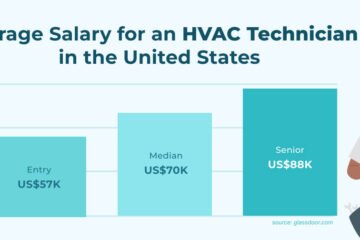
One of the biggest reasons to enter the trade is financial independence. Unlike office jobs where salary negotiation can be vague, the trades are often performance-based or union-scale.
According to the Bureau of Labor Statistics, the median pay is solid, but the opportunities for women are even better.
- Residential Service: Female technicians are often highly requested by elderly homeowners or stay-at-home moms who feel safer letting a woman into their home than a strange man.
- Sales & Management: Women with technical knowledge often fast-track into Service Manager or Sales roles because of superior communication skills.
| Role | Avg. Annual Salary (2026) |
| Apprentice | $38,000 – $48,000 |
| Journeyman | $65,000 – $85,000 |
| Service Manager | $80,000 – $110,000+ |
Scholarships for Women in HVAC
Because the industry is desperate to diversify, there is “free money” sitting on the table specifically for you. You don’t need to go into massive debt to go to <a href=”https://hvacexammaster.com/how-long-is-hvac-school/”>HVAC school</a>.

Top Organizations to Know
- Women in HVACR: This is a non-profit organization dedicated to paving the way for women. They offer substantial scholarships, mentorship programs, and networking events. Check out Women in HVACR for details.
- Mike Rowe (mikeroweWORKS): The “Work Ethic Scholarship” is huge for trade students.
- Local Unions: Many local UA unions have initiatives to recruit women and will pay for your apprenticeship entirely.
How to Get Hired: Certification is Key
You can apply for scholarships and schools, but if you want to get hired fast, you need to speak the language of the employer. That language is Certification.
Regardless of gender, every technician must pass the same exams.
1. The EPA 608 (Mandatory)
You cannot legally handle refrigerant without this. Passing this exam before you apply for a job shows initiative. It tells the boss, “I am already legal to work.”
- Study Tip: Don’t let the technical terms scare you. Use our App to practice the specific leak rates and definitions.
2. NATE Certification (Career Booster)
Once you are working, getting NATE certified proves you are an expert. It builds massive confidence when you are the only woman on a job site and need to prove you know your stuff.
🛠️ Build Your Confidence
Knowledge is power. Master the electrical and refrigeration codes so you can answer any question on the job site.
Dealing with Challenges
It would be dishonest to say it’s always easy. You might encounter:
- Isolation: Being the only woman in the class or crew.
- Sizing Issues: Finding work boots (PPE) that fit women’s feet or gloves that fit smaller hands can be annoying (though brands like Dovetail Workwear are fixing this).
- Bathrooms: Finding a restroom on a commercial construction site can be a challenge.
Advice from Pros: Find a mentor. Join online communities like “Women in HVACR” Facebook groups. Having a support system makes the tough days much easier.
Conclusion: Your Future is Bright
The industry is changing. The “tough guy” culture is being replaced by a culture of professionalism and technology. Women in HVAC are uniquely positioned to thrive in this new era.
You have the opportunity to build a high-paying, secure career with your own two hands. Don’t let doubt stop you.
Ready to take the first step?
Start preparing for your certifications today. Walk into your first interview not just as a “female applicant,” but as a “certified technician.”
📱 Turn Downtime Into Study Time
Access 1,000+ exam questions directly in your browser. No downloads required. Perfect for busy schedules.


0 Comments