The Crossroad: Which Trade Should You Choose?
Are you looking for the most profitable hands-on career but feeling torn between trades? You are not alone. Many people looking into appliance repair training also consider becoming an HVAC technician. After all, both jobs involve fixing complex machines, working with electrical circuits, and saving the day for frustrated homeowners.
But which one is the better long-term career in 2026?
While they look similar from the outside, the daily life, the physical toll, and most importantly, the paycheck, are vastly different. If you fix a washing machine, you are an appliance tech. If you fix a 5-ton central air conditioning system, you are an HVAC tech.
But here is the secret overlap: if you want to fix a household refrigerator, you are legally required by the Federal EPA guidelines to hold an EPA 608 Type I Certification.
In this comprehensive guide, we will break down the true cost of an appliance repair school, compare the salaries, and help you decide which skilled trade is the best fit for your future.
📊 Test Your Electrical Basics
Both trades require you to know Ohm’s Law and how to use a multimeter. Take a quick diagnostic quiz to see your baseline skill level.
HVAC vs. Appliance Repair: What is the Difference?
Before you commit your time and money to an appliance repair training program, you need to understand the fundamental differences in the scope of work.
The Appliance Repair Technician (The Indoor Specialist)
Appliance repair focuses on residential or light commercial “white goods.”
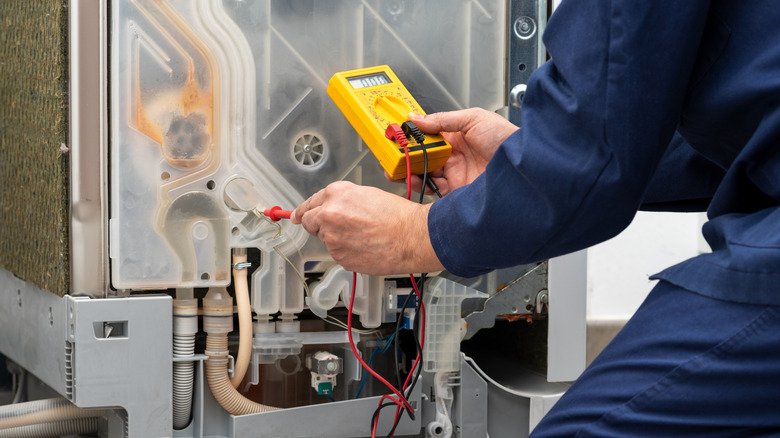
- The Equipment: Washing machines, dryers, dishwashers, ovens, stoves, and household refrigerators.
- The Environment: 95% of your work is done indoors, inside a customer’s climate-controlled kitchen or laundry room.
- The Physical Toll: Moderate. You will do a lot of kneeling and pulling heavy machines away from walls, but you rarely have to crawl in 130-degree attics or work on icy rooftops.
The HVAC Technician (The Climate Controller)
HVAC (Heating, Ventilation, and Air Conditioning) focuses on the systems that heat and cool the entire building.
- The Equipment: Gas furnaces, heat pumps, central AC units, ductwork, and commercial refrigeration racks.
- The Environment: Extreme. You are working outside in the rain, in freezing crawlspaces, or on blistering hot commercial roofs.
- The Physical Toll: High. Carrying 50-pound refrigerant tanks up extension ladders is a daily reality.
Salary Showdown: Who Makes More Money?
Let’s get straight to the numbers. If you are comparing trades, the return on investment matters. According to the latest data from the <a href=”https://www.bls.gov/ooh/installation-maintenance-and-repair/heating-air-conditioning-and-refrigeration-mechanics-and-installers.htm” target=”_blank” rel=”dofollow”>Bureau of Labor Statistics (BLS)</a> for 2026:
| Metric | Appliance Repair Technician | HVAC Technician |
| Median Pay | $46,000 / year | $57,300 / year |
| Top 10% Earners | $65,000+ | $84,000 – $100,000+ |
| Overtime Potential | Low to Moderate | Extremely High |
| Union Presence | Rare | Very Common (Higher Benefits) |
The Verdict on Salary:
HVAC wins hands down. Because HVAC failures (like a broken heater in winter) are considered absolute emergencies, technicians can charge premium overtime rates. Appliance repair is important, but a broken dishwasher can usually wait until Monday morning. Furthermore, the commercial side of HVAC pays significantly higher than residential appliance repair.
Barrier to Entry: Training and Schooling
Which trade gets you into the workforce faster?
The Appliance Repair School Route
Getting into appliance repair is incredibly fast. Most comprehensive appliance repair training programs take anywhere from 3 to 8 weeks.
- Cost: A typical appliance repair school or online boot camp costs between $500 and $2,000.
- Requirements: You learn basic electrical troubleshooting, motor diagnostics, and how to read schematics. There are very few state licensing requirements for general appliances.
The HVAC Training Route
HVAC has a higher barrier to entry due to the danger involved with high-voltage electricity, gas piping, and high-pressure refrigerants.
- Cost: Trade schools can cost between $10,000 and $20,000 and take 6 to 24 months to complete.
- Requirements: To legally work independently, you often need to log 4,000+ hours as an apprentice and pass a strict Journeyman License exam in your state.
The Secret Overlap: Why Both Need the EPA 608
If you decide that an appliance repair school is the better fit for your lifestyle, there is one massive hurdle you still have to cross: Refrigerators.
You cannot call yourself a master appliance technician if you turn down refrigerator repair jobs. And if you want to hook up gauges to a fridge, top off a freon charge, or replace a compressor, federal law dictates that you must pass the EPA 608 Certification exam.
The EPA 608 Type I Certification
For appliance repair, you specifically need the Type I Certification (Small Appliances). This covers any appliance manufactured, charged, and hermetically sealed at the factory with five pounds or less of refrigerant.
To pass this, your appliance repair training must cover:
- Ozone depletion concepts and the Clean Air Act.
- Refrigerant recovery requirements.
- Safety regarding new mildly flammable (A2L) refrigerants.
If you fail this exam, your appliance repair career is severely limited to just washers, dryers, and ovens.
🛠️ Don’t Fail Your EPA Type I
Whether you repair fridges or central ACs, you must know the EPA leak rate rules. Practice the exact questions you will see on the exam.
Which Trade Should You Choose?
So, should you enroll in an appliance repair training program or go all-in on an HVAC apprenticeship?
Choose Appliance Repair If:
- You prefer a predictable, 9-to-5 schedule.
- You want to work indoors in comfortable environments.
- You want to start your own solo business quickly with very little startup capital (a van and basic hand tools are enough).
- You don’t want to deal with extreme physical labor or heavy lifting on rooftops.
Choose HVAC If:
- Your primary goal is maximum earning potential and six-figure salaries.
- You enjoy a highly physical, fast-paced, and varied environment.
- You eventually want to work on massive commercial equipment or union jobs.
- You are willing to spend years studying mechanical codes to earn your Journeyman license.

Conclusion: Start Your Journey Today
Both paths offer incredible job security. In a world where AI is replacing office jobs, robots cannot walk into a kitchen to replace a bad drain pump, nor can they climb into an attic to braze a copper line set.
If you choose the appliance route, find a reputable appliance repair school to get the basics down fast. But remember, whether you are fixing a Whirlpool fridge or a 5-ton Trane condenser, electricity and refrigeration cycles work the exact same way.
Ready to get certified?
Before you can touch a sealed system, you need that EPA card. Don’t rely on outdated textbooks. Use our interactive practice tool to master the EPA Core and Type I exams today.
📱 Ace the EPA 608 Exam
Access 1,000+ updated questions for the EPA 608 Core and Type I exams directly in your browser. No downloads required.



0 Comments