Best HVAC Classes CT Guide: Decoding S-2 & D-2 Licenses (2026)
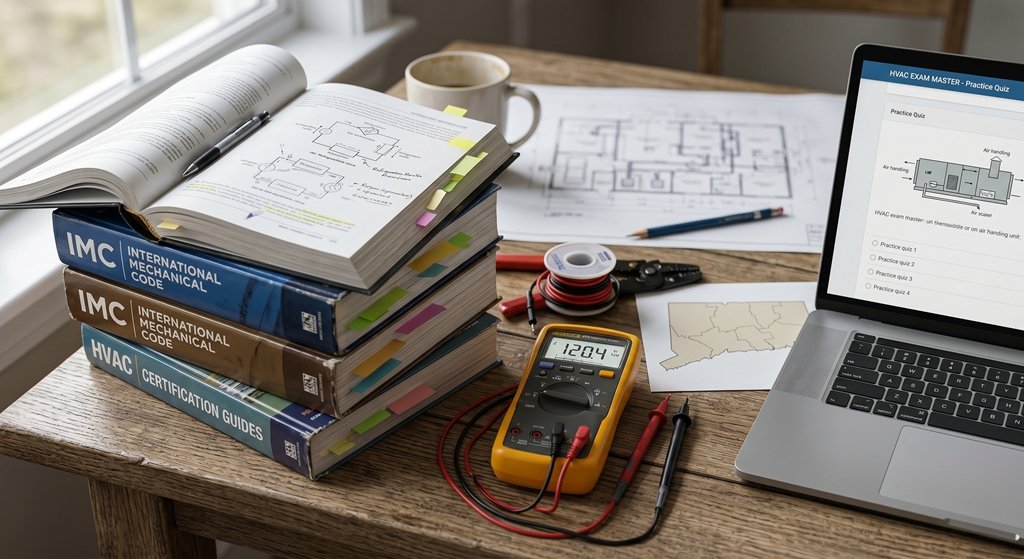
The Most Confusing Licensing State in America?
If you live in Connecticut and want to start a career in heating and cooling, you have probably hit a massive wall of confusion. You start searching for hvac classes ct, hoping to find a simple 6-month trade school that will hand you a diploma so you can start working.
Then, you visit the state government website and are hit with an alphabet soup of licenses: S-1, S-2, D-1, D-2, B-1, B-2.
What do these letters mean? Which one do you actually need to make a living? And how do trade schools fit into this complicated legal puzzle?
Unlike states like Texas or Florida where you can simply register as a helper and start turning wrenches, Connecticut heavily regulates the skilled trades. To maximize your HVAC technician salary in this state, you must navigate their strict apprenticeship and classroom requirements.
In this 2026 guide, we are going to decode the Connecticut licensing system. We will show you exactly what classes you need to take, the difference between the license types, and the federal hurdle you must jump over first.
📊 Test Your Baseline Knowledge
Before you worry about state codes, do you know the basics of thermodynamics and electricity? Take a quick diagnostic quiz.
Decoding Connecticut’s “Alphabet Soup” Licenses
The Connecticut Department of Consumer Protection (DCP) strictly controls who can install and repair climate control systems.
They categorize licenses by “Unlimited” (S) and “Limited” (D, B, G). Furthermore, they split the ranks between “Contractors” (the number 1) and “Journeypersons” (the number 2).
Here is the simple breakdown of the most common licenses you need to know about.
The “S” Licenses (Unlimited Heating, Piping, and Cooling)
This is the holy grail for a technician in CT. “Unlimited” means exactly what it sounds like: there are no restrictions on the size or type of equipment you can work on.
- S-2 (Journeyperson): This is your goal. An S-2 allows you to do the physical work on any residential or commercial system, but you must work under the employment of an S-1 Contractor.
- S-1 (Contractor): This allows you to own the business, pull permits, and bid on massive commercial jobs. You must hold an S-2 for at least two years before applying for your S-1.
The “D” Licenses (Limited Heating, Cooling, and Piping)
- D-2 (Journeyperson): This is a restricted license. It only allows you to work on systems that do not exceed certain tonnage or BTU limits (typically residential and light commercial).
- D-1 (Contractor): The business-owner version of the D-2.
The Verdict: If you are researching hvac classes ct options, you should aim for a program that provides the classroom hours necessary to eventually qualify for the S-2 Unlimited Journeyperson License. Do not limit your future earning potential by settling for a restricted license early on.
The Role of HVAC Classes CT in Your Journey
In Connecticut, you cannot just take a test to get your S-2 license. You must complete a formal apprenticeship registered with the state.
A state-approved apprenticeship requires two things:
- On-the-Job Training (OJT): Usually 8,000 hours (about 4 years) working in the field under an S-1 contractor.
- Related Technical Instruction (RTI): This is where school comes in. You are required to complete hundreds of hours of formal classroom instruction.
When you look for hvac classes ct, you must ensure the school is approved by the Connecticut Office of Apprenticeship Training.
Many students choose to enroll in a full-time trade school or community college before finding an employer. Graduating from an accredited program not only knocks out your required classroom hours but also makes you highly attractive to local contractors looking to hire apprentices.
Looking for a broader overview of the journeyman process? Read our National Journeyman License Guide.
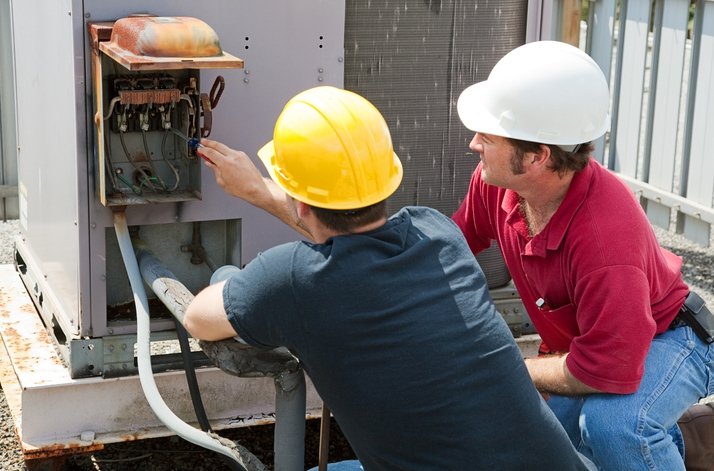
The Federal Law You Can’t Ignore: EPA 608
Here is a reality check: Earning your Connecticut S-2 license takes roughly four years. You need to put food on the table long before then.
Before any S-1 contractor will hire you as an apprentice and let you ride in their service van, you need to prove you are not a legal liability. To touch a manifold gauge or handle Freon, you must pass the Federal EPA 608 Certification.
Unlike the state license, the EPA 608 does not require 8,000 hours of experience. You can study for it and pass it in a few weeks.
Most reputable hvac classes ct will include EPA prep in their curriculum. However, smart students do not wait for their instructors. They study the leak rate thresholds, recovery vacuum levels, and dates independently. Walking into an interview with your Universal EPA card already in your wallet is the fastest way to get hired.
🛠️ Get Your Federal Card First
Don’t wait 4 years to become useful. Study the mandatory EPA regulations using our interactive simulator and become hirable today.
Passing the PSI State Exams
Once you have completed your 8,000 hours of OJT and finished your approved hvac classes ct, you must submit your application to the state. Once approved, you will sit for the official state exam, which is administered by PSI Exams.
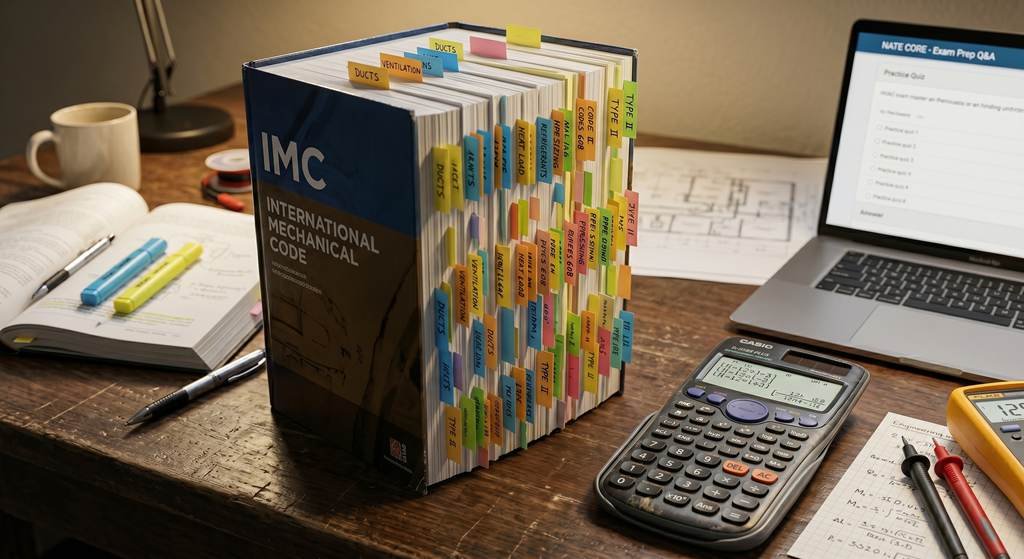
The S-2 exam is notoriously difficult. It tests your ability to navigate the International Mechanical Code (IMC), the National Electrical Code (NEC), and state-specific safety regulations.
Because it is an open-book exam, many technicians assume it will be easy. This is a fatal mistake. You will not have time to read the book during the test. You must know exactly how to use the index to find the sizing chart for a gas pipe or the clearance requirements for an exhaust vent in under 60 seconds.
Resource: If you want to know how much taking all these tests will impact your wallet, check out our Cost of HVAC Certification Guide.
Frequently Asked Questions (FAQ)
Q: Can I take online hvac classes ct?
A: Yes, many schools offer online or hybrid options for the “Related Technical Instruction” (classroom) portion. However, the state still requires you to complete your 8,000 hours of hands-on, on-the-job training as a registered apprentice to earn the S-2 license.
Q: How much does a licensed S-2 Journeyperson make in CT?
A: Because Connecticut has a high cost of living and strict licensing barriers, the pay is excellent. A licensed S-2 journeyperson typically earns between $35 and $50+ per hour, heavily depending on union affiliation and overtime availability.
Q: Do I need a license to clean coils or change filters?
A: No. Entry-level maintenance tasks generally do not require an S-2 license. However, if your work involves handling refrigerant, brazing lines, or modifying electrical circuits, you must be properly registered, licensed, or directly supervised by an S-1/S-2 holder.
Conclusion: Build Your Foundation Now
Connecticut’s strict licensing laws protect the industry from unqualified hacks. It keeps salaries high and ensures that the trade is respected as a highly skilled profession.
If you are researching the best hvac classes ct has to offer, remember that your classroom time is just one piece of the puzzle. You are entering a four-year journey of continuous learning.
Don’t let the technical exams overwhelm you. By breaking down the concepts and practicing active recall, you can confidently pass your federal and state exams.
Ready to start training your brain?
Whether you are studying for your EPA 608, a NATE specialty, or brushing up on electrical theory before your state exam, we have the tools you need.
📱 Ace Your Certification Exams
Access 1,500+ updated questions covering the exact topics found on EPA, NATE, and State Licensing exams. No downloads required.


0 Comments