The Best Heating and Air Certification Guide: Do You Need Separate Licenses (2026)?

The Frustrating Limit of Your HVAC License
Are you an HVAC pro looking for the best electrical technician certification to legally expand your scope of work? You are in the right place to take your career to the next level.
Picture this: It is a 100-degree day in July. You get called out to a “No Cool” job. You check the thermostat, inspect the condenser, and track the voltage drop. You finally trace the problem back to the house’s main breaker panel—a melted 30-amp breaker.
You know exactly how to fix it. It takes five minutes and a $15 part. But depending on the state you live in, your standard HVAC license legally forbids you from touching the line side of the disconnect box. You have to tell the sweating homeowner to call a licensed electrician.
You just lost the repair revenue, frustrated the customer with a delay, and wasted an hour of diagnostics.
In 2026, the lines between HVAC and electrical work are blurring. To maximize your HVAC technician salary and become an unstoppable diagnostician, you need to bridge this gap. In this guide, we will explain how obtaining a restricted electrical license can permanently solve this problem.
📊 Test Your Electrical Safety Knowledge
Before touching high voltage, you must know the codes. Take a quick diagnostic quiz to see if your electrical theory is up to par.
The Legal Line: Where HVAC Ends and Electrical Begins
To understand why you need an upgrade, you must understand the law.
When you earn your Journeyman HVAC License, you are granted permission to install, repair, and maintain mechanical systems. However, your electrical jurisdiction is strictly limited.
In most states, the HVAC technician’s legal boundary is the Load Side of the equipment disconnect box.
- What you CAN do: Wire the condenser, replace the contactor, run low-voltage thermostat wire, and run the whip from the disconnect to the unit.
- What you CANNOT do: Run the main high-voltage Romex wire from the house’s main breaker panel to the outside disconnect. You also cannot swap out the main breaker itself.
That high-voltage territory belongs exclusively to licensed electricians and is governed by the strict rules of the National Electrical Code (NFPA 70). Violating this boundary opens you and your company up to massive liability and code violations.
State-Specific Extremes: Keep in mind that some regions take these laws to the extreme. For example, if you are looking for jobs or hvac everett wa (Washington State), you will quickly learn that the state classifies HVAC technicians essentially as electricians. To work independently there, you must obtain a strict L&I 06A or 06B electrical license, proving that robust electrical training is no longer optional—it is the law.
What is an Electrical Technician Certification for HVAC?
You do not need to quit your job and undergo a 4-year electrical apprenticeship to fix a breaker. Many states offer a highly specific electrical technician certification designed perfectly for our trade.
It is often called a Limited Electrical License or a Restricted Electrical License.
What Does a Limited License Allow?
This specific credential allows a licensed HVAC contractor or technician to perform electrical work only if it is directly associated with the installation or repair of HVAC/R equipment.
With this electrical technician certification in your pocket, you can legally:
- Run a new 240V circuit from the main panel to power a newly installed mini-split or heat pump.
- Replace a faulty 30-amp or 50-amp breaker inside the homeowner’s main electrical panel.
- Install convenience outlets (receptacles) directly required for servicing the HVAC equipment.
By holding this dual-license, you eliminate the need to call a sub-contractor. You handle the entire job from start to finish.
The ROI: Why Invest in Electrical Technician Training?
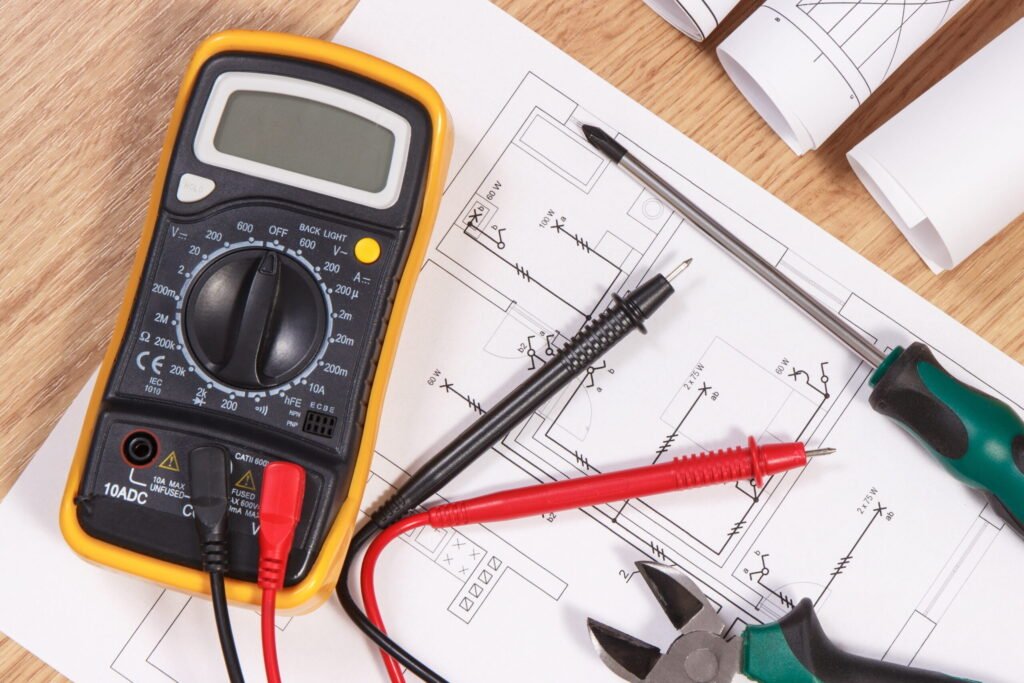
Pursuing formal electrical technician training takes time and costs money for the exams. But the Return on Investment (ROI) is staggering.
1. Stop Leaving Money on the Table
If you own an HVAC business, sub-contracting electrical work eats into your profit margins. If you are an employee, being the “guy who can do both” makes you incredibly valuable. You will be assigned the biggest, most complex installations because the service manager knows you don’t need a “Sparky” (electrician) to hold your hand.
2. Become the Ultimate Diagnostician
As we discussed in our Electrical Troubleshooting Guide, 80% of HVAC failures are electrical. Deepening your understanding of voltage, amperage, and the NEC code makes you a faster, more accurate technician.
3. Future-Proof Your Career
The industry is electrifying. Gas furnaces are being replaced by high-voltage inverter heat pumps. The demand for technicians who understand heavy electrical loads is exploding in 2026.
🛠️ Master the NEC Codes First
To get a limited electrical license, you must pass an exam based on the National Electrical Code. Practice these exact scenarios now.
Steps to Get Your Restricted License in 2026
If you are convinced it is time to upgrade your credentials, here is the standard roadmap. Keep in mind, every state board (like the TDLR in Texas or the DBPR in Florida) has different rules.
- Verify Your State’s Rules: Check your local Department of Labor or licensing board to see if they offer a “Restricted” or “Limited” electrical license for HVAC contractors.
- Complete the Hours: You will likely need to prove a certain number of hours working specifically on electrical systems.
- Take the Training: Enroll in approved electrical technician training courses that focus on the National Electrical Code (NEC).
- Pass the Exam: This is an open-book exam, but it is brutal. You must know how to navigate the NEC code book instantly to calculate wire gauge sizes, conduit fill limits, and breaker sizing.
The Real Hurdle: Mastering 24V, 120V, and 240V Logic
Before you run out and apply for a state-level electrical technician certification, you must look in the mirror and assess your current skills.
Many technicians can read an EPA 608 study guide and pass a refrigerant test, but electrical theory is the ultimate gatekeeper. It requires pure logic.
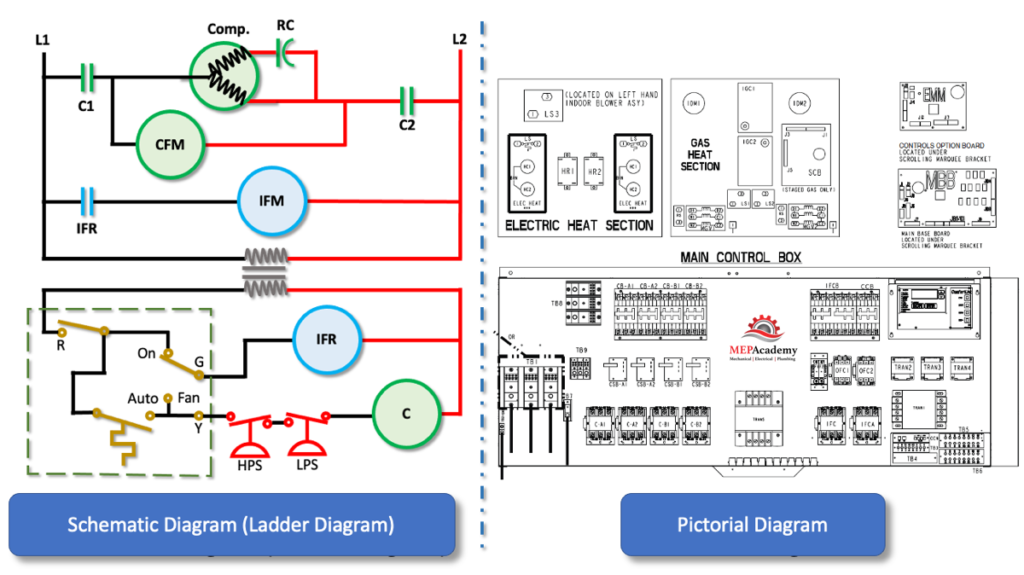
You must be able to seamlessly switch between understanding low-voltage control circuits (24V thermostat wiring) and high-voltage line power (120V/240V motors and compressors). If you still get confused reading a ladder schematic, you are not ready to touch a live breaker panel.
Conclusion: Expand Your Horizons
The most successful technicians never stop learning. If you are tired of handing lucrative repair work over to electricians, it is time to expand your legal jurisdiction.
Earning a limited electrical technician certification will make you the ultimate “one-stop-shop” for your customers and employers.
But passing the strict NEC-based exams requires serious preparation. You cannot fake your way through electrical codes.
Ready to master the circuits?
Don’t wait until you are sitting in the testing center. Start building your electrical troubleshooting logic today with our comprehensive, scenario-based practice tools.
📱 Conquer Electrical Theory Today
Electrical questions are the hardest part of any licensing exam. Access 1,500+ interactive troubleshooting questions and build your confidence.


0 Comments