The Best Heating and Air Certification Guide: Do You Need Separate Licenses (2026)?
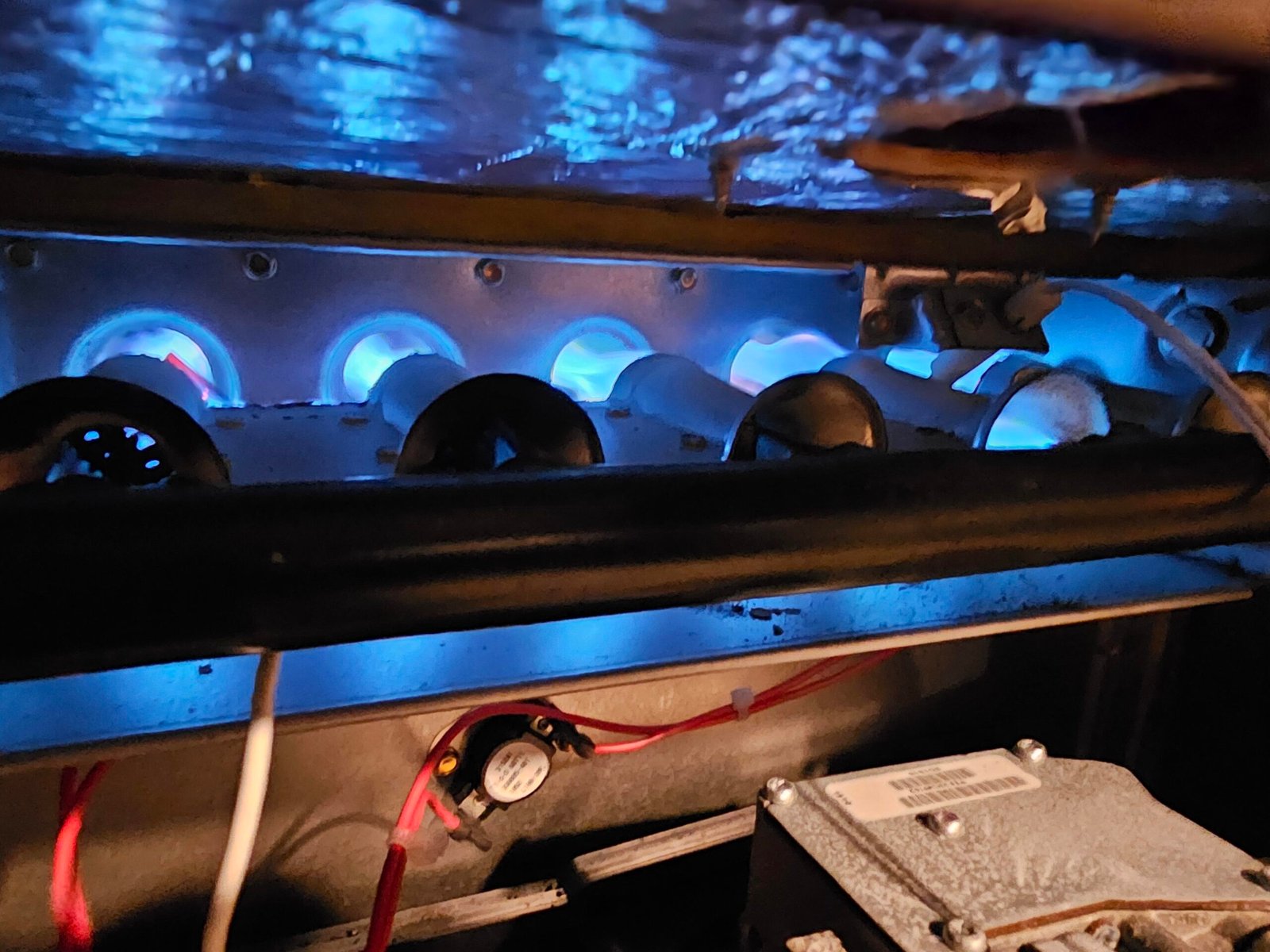
The Hidden Divide in the HVAC Industry
Are you confused by the exact requirements for heating and air certification in 2026? You are certainly not alone.
When most people enter this trade, they view HVAC as one giant machine. They assume that if they pass a single test, they are legally cleared to fix anything attached to a thermostat. This is a massive misconception that can lead to failed job interviews, illegal work, and serious safety hazards.
The acronym HVAC stands for Heating, Ventilation, and Air Conditioning. However, the government and the industry treat the “H” (Heating) and the “AC” (Air Conditioning) as two completely different beasts.
Repairing an air conditioner deals with environmental laws (protecting the ozone layer). Repairing a gas furnace deals with life-safety laws (preventing explosions and toxic gas leaks).
In this complete guide, we are going to break down the “split personality” of the trade. We will explain exactly which heating and air certification you need for each side of the equipment, and how to avoid the deadly mistakes that untrained technicians make.
📊 Heating vs. Cooling: Test Your Skills
Do you know how to test a flame sensor versus a run capacitor? Take a quick diagnostic quiz to see where your knowledge gaps are.
The “Air” Side: Mandatory Federal Law
Let’s start with the cooling side of the industry. The primary concern here is the refrigerant (Freon, Puron, etc.) circulating inside the copper lines.
If you want to attach manifold gauges to an air conditioner, recover refrigerant, or braze a line set, you do not have a choice in the matter. You must obtain your EPA 608 Certification.
This is a federal mandate enforced by the Environmental Protection Agency. The EPA 608 exam tests your knowledge of ozone depletion, the Clean Air Act, and mandatory leak rate thresholds. It does not test your ability to actually fix the air conditioner. It only proves you know how to handle the chemicals safely without venting them into the sky.
If you are looking for a baseline heat and air certification, the EPA 608 Universal card is your starting point. However, remember this critical fact: The EPA 608 has absolutely nothing to do with heating.
You can hold a Universal EPA card and still have zero legal qualifications to touch a gas furnace.
The “Heating” Side: The Danger Zone
This is where the industry gets complicated. There is no single federal “EPA-style” exam for heating. However, the stakes on the heating side are arguably much higher.
When you work on a gas or oil furnace, you are dealing with combustion. If you wire a limit switch incorrectly, or fail to test the draft inducer motor properly, the furnace will not just “stop working.” It can result in a house fire, an explosion, or fatal Carbon Monoxide (CO) poisoning.
According to the Consumer Product Safety Commission (CPSC), improperly vented or malfunctioning heating appliances are a leading cause of accidental CO deaths in North America.
Because of this danger, employers demand rigorous proof that you know what you are doing. If you are pursuing a full heating ventilation and air conditioning certification, you must seek out specialized credentials for the “H” in HVAC.
1. The NATE Gas Heating Certification
Since there is no federal exam for furnaces, the industry relies on NATE (North American Technician Excellence).
Taking the NATE Gas Heating exam (either Service or Installation) is the absolute best way to prove your competence. This exam is notoriously difficult. It tests your knowledge of:
- Gas pipe sizing and pressure testing.
- Combustion theory and venting categories.
- Electrical troubleshooting of igniters, flame sensors, and rollout switches.
Passing the NATE Gas Heating exam will instantly boost your HVAC technician salary because it signals to service managers that you are a safe, reliable diagnostic expert.
2. State Gas Fitter Licenses
Depending on your state or city, your general heating and air certification might not be enough to run gas lines. Many jurisdictions (like certain counties in Texas or Massachusetts) require a separate “Gas Fitter” or “Mechanical” license to legally install or modify natural gas piping leading to the furnace.
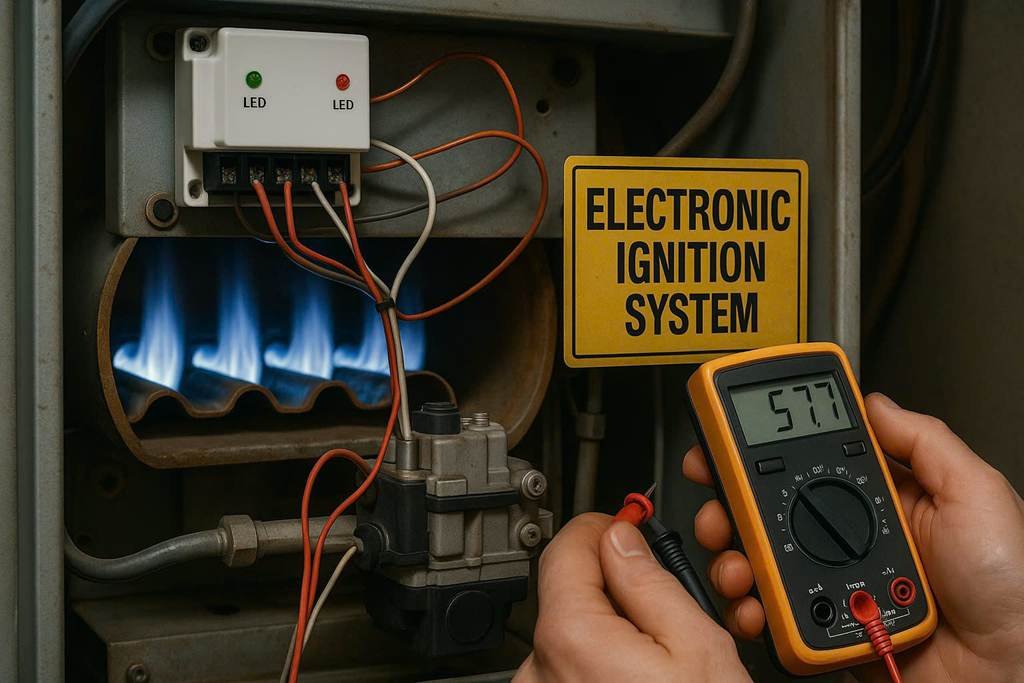
The Overlap: Electrical Mastery is Required for Both
While heating and cooling use different physics (combustion vs. thermodynamics), they share one massive common ground: Electricity.
Whether you are fixing a frozen evaporator coil outside or a furnace that won’t ignite in the attic, 80% of your service calls will be electrical issues.
If you want a true, comprehensive heating ventilation and air conditioning certification, you must master low-voltage controls and high-voltage loads. You need to know how to read a ladder schematic, how to test a dual-run capacitor, and how to verify 24V at the control board.
If you don’t know how to track voltage through a series of safety switches, you will fail both the NATE Air Conditioning exam and the NATE Gas Heating exam.
Related reading: Master the basics with our guide on HVAC Thermostat Wiring Color Codes.
🛠️ Don’t Guess on Electrical Faults
Reading about limit switches isn’t enough. Practice diagnosing broken circuits and faulty gas valves using our interactive simulator.
Which Heat and Air Certification Should You Get First?
If you are a beginner looking at the mountain of exams and licenses, the path can seem overwhelming. Do not try to get every heat and air certification at the same time. Follow this strategic roadmap for 2026:
Step 1: The EPA 608 Universal (Month 1)
Get this out of the way immediately. It is an open-book/closed-book test focused purely on laws and memorization. It makes you legally employable to carry tools on a job site.
Step 2: NATE Core & Air Conditioning (Year 1-2)
Once you are working, start studying the refrigeration cycle. Get your NATE AC certification so you can handle the high-volume summer service calls confidently.
Step 3: NATE Gas Heating (Year 2-3)
As you gain experience, dive into combustion analysis and furnace wiring. Earning your NATE Gas Heating badge makes you a “year-round” asset to your employer. They won’t lay you off in the winter because you are the guy who can safely fix the boilers and furnaces.
Step 4: The State Journeyman License (Year 4+)
After logging roughly 8,000 hours in the field, you will apply for your state mechanical license. This exam will test you on both cooling codes and heating/venting codes (like the International Mechanical Code).
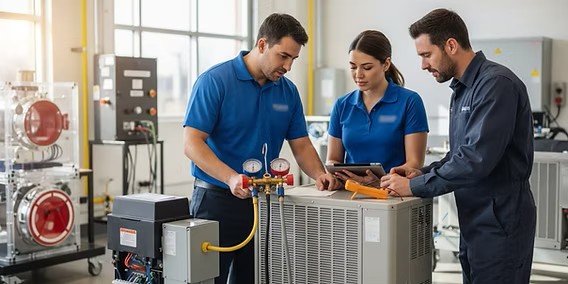
Conclusion: Become a Dual-Threat Technician
The industry is full of “summer techs” who only know how to check Freon pressures. They panic when the weather turns cold and they have to diagnose a flashing error code on a gas furnace control board.
If you want to achieve job security and command a premium hourly rate, you must conquer both halves of the trade. You need the complete heating and air certification package.
Understand the laws of the EPA, master the thermodynamics of Air Conditioning, and respect the deadly physics of Gas Heating.
Ready to start your journey?
Whether you need to memorize the EPA leak rate thresholds or learn how to troubleshoot a faulty flame sensor, relying on outdated textbooks will slow you down.
📱 Master Both Sides of the Trade
Access 1,500+ updated questions covering AC refrigeration cycles and Furnace electrical troubleshooting. Start boosting your knowledge today.

0 Comments