EPA Universal 608 Certification: Requirements, Cost & Exam Guide (2026)
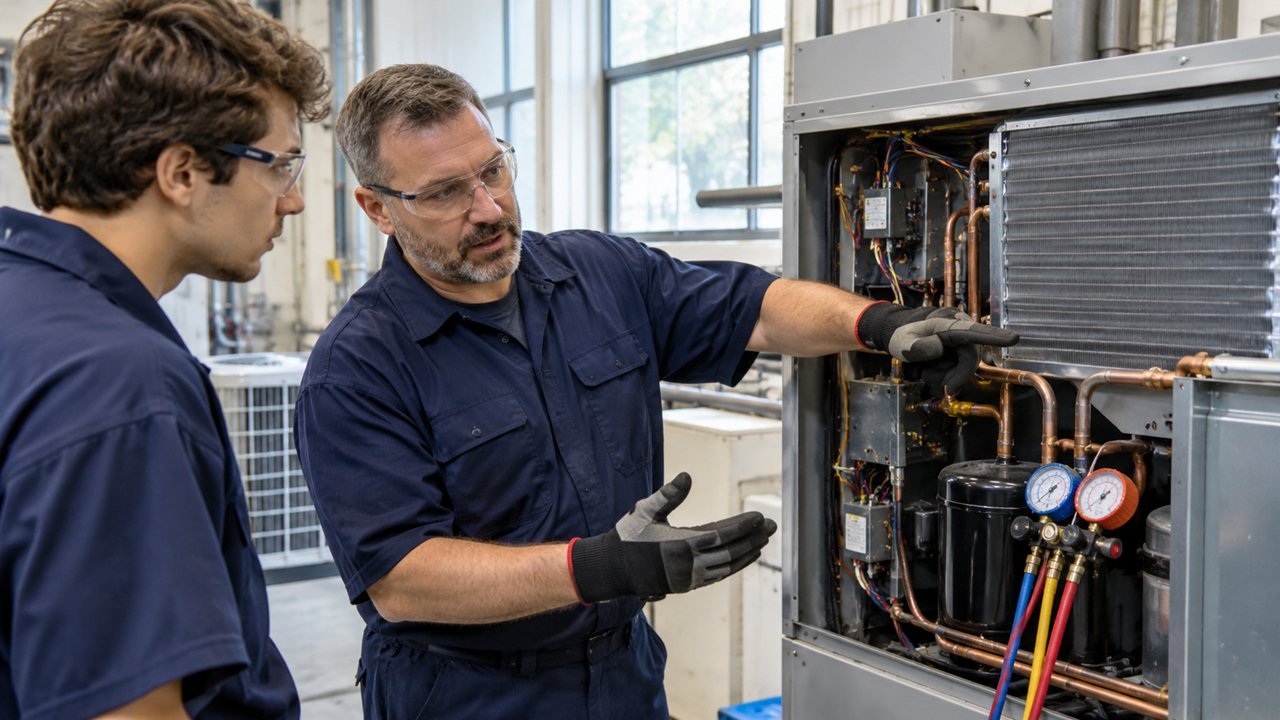
If you want to work with different types of refrigeration and air-conditioning equipment, earning your EPA Universal 608 certification can be one of the most useful credentials you obtain as an HVAC technician.
Unlike a single-category EPA certification, Universal Certification covers small appliances, high-pressure refrigeration systems, and low-pressure equipment. That broader coverage can be valuable if you plan to work in residential HVAC, commercial refrigeration, or industrial cooling.
But does every HVAC technician need Universal Certification? How many questions are on the exam? Can you take it online? And how much should you expect to pay in 2026?
This guide answers those questions and explains the current certification requirements, examination structure, available testing options, and practical steps for preparing for the EPA 608 Universal exam.
What Is EPA Universal 608 Certification?
EPA Universal 608 Certification is a federal technician credential covering all three equipment categories under Section 608 of the Clean Air Act: Type I, Type II, and Type III.
To earn Universal Certification, you must successfully complete the Core examination and all three type-specific examinations under the applicable secure testing requirements.
The U.S. Environmental Protection Agency requires technicians performing covered activities involving regulated refrigerants to hold appropriate Section 608 certification.
Universal Certification demonstrates that you have passed the required knowledge examinations for all three equipment categories. It does not replace state HVAC licensing requirements or prove mastery of every HVAC installation and repair skill.
EPA 608 Universal Certification: Quick Facts
| Requirement | Details |
|---|---|
| Certification | EPA Section 608 Universal |
| Exam sections | Core, Type I, Type II, Type III |
| Typical total questions | 100 multiple-choice questions |
| Common passing standard | 70% per section |
| Common passing target | At least 18 correct out of 25 per section |
| Testing | Secure, closed-book, proctored examination |
| Online availability | Available through participating approved providers |
| Certification expiration | Does not expire |
| Issuing organization | EPA-approved certifying organization |
The 100-question format and 70% scoring standard are commonly used by approved examination providers. Confirm the exact scoring, time limit, and retake policies with the organization administering your test.
For a broader explanation of Section 608 requirements, see the EPA 608 Certification Guide.
EPA 608 Universal vs. Type I, Type II, and Type III
One of the biggest decisions for new HVAC technicians is whether to earn a single certification type or pursue Universal Certification immediately.
The difference comes down to equipment coverage.
| Certification | Equipment Coverage | Typical Applications |
|---|---|---|
| Type I | Qualifying small appliances | Household refrigerators, window AC units |
| Type II | High- and very-high-pressure appliances | Residential split systems, heat pumps, commercial refrigeration |
| Type III | Low-pressure appliances | Certain large commercial chillers |
| Universal | All three Section 608 equipment categories | Technicians servicing multiple equipment types |
Type I: Small Appliances
Type I covers qualifying appliances that are fully manufactured, charged, and hermetically sealed at the factory with five pounds or less of refrigerant.
Examples include certain household refrigerators, freezers, and window air conditioners.
If your intended work is limited to these appliances, Type I may satisfy your immediate certification needs.
However, Type I alone does not qualify you for all residential and commercial HVAC systems.
Type II: High-Pressure Equipment
Type II covers high-pressure and very-high-pressure appliances, excluding small appliances and motor vehicle air-conditioning systems.
For residential HVAC technicians, this is particularly important because common split-system air conditioners and many heat pumps fall within this category.
If you primarily intend to service residential air conditioning, Type II may be the most directly relevant credential.
Type III: Low-Pressure Equipment
Type III applies to low-pressure refrigeration appliances, including certain centrifugal chillers used in commercial and industrial buildings.
These systems involve distinctive service considerations, including low-pressure recovery, evacuation, air infiltration, and purge equipment.
Technicians who work with commercial chillers may need this credential.
Universal: All Three Equipment Categories
Universal Certification combines the coverage of Type I, Type II, and Type III.
For someone planning a long-term career across different refrigeration and air-conditioning systems, it removes the need to maintain separate limitations under those three Section 608 categories.
However, it does not replace certification under Section 609 where that separate credential is required for motor vehicle air-conditioning service.
Is EPA 608 Universal Certification Worth It?
For many HVAC technicians, Universal Certification is worth considering because it offers broader equipment coverage.
But the best choice depends on the work you expect to perform.
When Universal Certification Makes Sense
Universal may be a good option if you:
- Are beginning an HVAC/R career and want broader equipment coverage.
- Expect to work with both residential and commercial systems.
- May move between different refrigeration service roles.
- Want to avoid needing additional Section 608 type examinations later.
- Are applying for jobs where employers prefer candidates with Universal Certification.
For example, imagine a technician who starts by servicing residential heat pumps but later joins a company maintaining commercial refrigeration and low-pressure chillers.
A Type II credential may cover the technician’s original responsibilities but not all of the equipment encountered in the new role.
Universal Certification provides broader Section 608 coverage from the beginning.
When a Single Certification May Be Enough
Universal is not always necessary.
If you work exclusively on qualifying small appliances, Type I may be sufficient.
Similarly, a technician whose responsibilities are limited to high-pressure refrigeration equipment may not immediately need Type III coverage.
The tradeoff is straightforward: Universal requires more preparation, while a single type may be enough for a narrowly defined job.
Best practical approach: Match the certification to your expected responsibilities, then consider whether broader coverage justifies the additional study effort and cost.
How Hard Is the EPA 608 Universal Certification Exam?
The Universal exam can be more demanding than a single-category exam because it covers four separate knowledge areas.
Candidates must understand not only general refrigerant regulations but also recovery and servicing requirements for different types of equipment.
The difficulty depends on your prior experience.
An experienced residential HVAC technician may already be comfortable with high-pressure systems but have limited familiarity with low-pressure chillers.
A beginner may need additional time to understand basic refrigerant properties and recovery terminology.
The key is to prepare for each section independently rather than relying on strong knowledge in one category to compensate for weaknesses in another.
How Many Questions Are on the Universal Exam?
A commonly used Universal examination format contains four sections:
| Exam Section | Questions | Main Knowledge Area |
|---|---|---|
| Core | 25 | Regulations, environmental protection, safety |
| Type I | 25 | Small appliances |
| Type II | 25 | High-pressure appliances |
| Type III | 25 | Low-pressure appliances |
| Total | 100 | All required categories |
A commonly used Universal examination format contains four sections with 25 questions each, for a total of 100 questions.
Examination time limits, scoring procedures, and retake policies may vary among EPA-approved certifying organizations. Confirm the current requirements with your selected provider before scheduling your test.
What Score Do You Need to Pass?
A commonly used passing requirement is 70% for each section.
With 25 questions per section, that means at least 18 correct answers.
For study planning, it is safer to aim well above the minimum than to assume a marginal practice score will transfer directly to the official exam.
You should verify the provider’s exact passing rules before registering, especially if you previously passed one or more sections.
EPA 608 Universal Exam Topics You Need to Study
To prepare effectively, divide the required knowledge into four separate study areas.
Core: Environmental Regulations and Refrigerant Safety
The Core section covers information relevant to all certification categories.
Major topics include:
- Ozone depletion and refrigerant environmental impacts.
- Refrigerant recovery, recycling, and reclamation.
- Federal refrigerant management regulations.
- Recovery cylinders and safe handling procedures.
- Refrigerant identification and pressure-temperature relationships.
- Personal protective equipment and safety hazards.
A common source of confusion is the difference between recovering, recycling, and reclaiming refrigerant.
Recovery means removing refrigerant from an appliance and storing it externally without necessarily processing it.
Recycling involves cleaning refrigerant for reuse through processes such as oil separation and filtration.
Reclamation involves processing refrigerant to meet the applicable purity standard.
Understanding these distinctions is more valuable than memorizing definitions without context.
Start with the EPA 608 Core Practice Test if you need to strengthen your foundation.
Type I: Small-Appliance Recovery
The Type I section focuses on qualifying factory-sealed small appliances.
Important subjects include recovery requirements, compressor operating conditions, recovery equipment, and access fittings.
Pay particular attention to how recovery procedures differ when an appliance’s compressor is operational versus inoperative.
You should also understand the difference between system-dependent and self-contained recovery equipment.
Review the EPA Type I Practice Test for small-appliance preparation.
Type II: High-Pressure Refrigeration Systems
Type II requires a deeper understanding of high-pressure equipment.
Topics include:
- Leak detection and applicable repair requirements.
- Refrigerant recovery and evacuation.
- Pressure-temperature relationships.
- Major versus non-major repairs.
- Recovery equipment limitations.
- Safe handling of high-pressure systems.
For example, a technician may need to determine the appropriate recovery procedure based on system conditions and the type of servicing activity being performed.
The correct answer often depends on several details rather than a single memorized number.
Use the EPA Type II Practice Test to review these concepts.
Type III: Low-Pressure Refrigeration Systems
Type III deals with low-pressure refrigeration equipment, especially certain chillers.
Important topics include:
- Low-pressure recovery techniques.
- Evacuation procedures.
- Air and moisture infiltration.
- Purge units.
- Leak detection.
- Safety precautions for low-pressure equipment.
These topics can be unfamiliar to technicians who primarily work with residential air-conditioning equipment.
The EPA Type III Practice Test provides a focused starting point.
How to Prepare for All Four EPA 608 Exam Sections
Preparing for Universal Certification is easier when you treat each exam section as a separate learning objective.
A useful approach is to start with foundational knowledge before moving into equipment-specific material.
Step 1: Assess Your Core Knowledge
Begin by reviewing environmental regulations, recovery principles, and refrigerant safety.
Complete a Core practice session to identify areas where you need more review.
Do not move forward simply because you recognize common terms. Make sure you understand the technical meaning behind each concept.
Step 2: Study Each Equipment Category
Next, work through Type I, Type II, and Type III independently.
Focus on the differences among small appliances, high-pressure systems, and low-pressure systems.
Instead of memorizing isolated facts, use equipment examples to understand why different recovery rules apply.
Step 3: Review Missed Questions
After each practice session, examine your incorrect answers.
Ask yourself:
- Did I misunderstand the equipment category?
- Did I confuse recovery with evacuation?
- Did I overlook a safety condition?
- Did I apply a rule from the wrong certification type?
A focused review of weak subjects can make your study sessions more productive.
📘 Start With the EPA 608 Core Exam
Every Universal certification candidate needs strong Core knowledge. Review refrigerant regulations, recovery principles, and essential safety topics with focused practice questions before moving into the Type I, II, and III sections.
Step 4: Build a Four-Week Study Schedule
A four-week plan can help organize your preparation without rushing through all four sections.
| Week | Study Focus | Recommended Activity |
|---|---|---|
| Week 1 | Core | Regulations, safety, recovery terminology |
| Week 2 | Type I and Type II | Small-appliance and high-pressure equipment |
| Week 3 | Type III | Chillers, low-pressure recovery, evacuation |
| Week 4 | All four sections | Mixed practice and targeted review |
This is an illustrative schedule, not a guaranteed preparation period. Candidates without technical experience may need longer.
If you are already familiar with refrigeration systems, you may be able to progress more quickly.
Step 5: Take Mixed Practice Tests
Once you have covered every section, begin practicing across multiple categories.
The objective is to identify whether you can recognize the correct rule when questions switch between equipment types.
For a complete overview of the available preparation resources, visit the EPA 608 Practice Test Guide.
How to Get EPA 608 Universal Certification in 2026
After preparing for the examination, the next step is to complete the official certification process.
Step 1: Choose an EPA-Approved Certifying Organization
The EPA maintains a directory of approved Section 608 certification programs.
Some organizations offer testing at physical locations, while others provide remotely proctored examinations.
Before registering, confirm that the organization is approved to administer the Universal examination.
Step 2: Compare Examination Fees and Requirements
There is no single national price for EPA Universal Certification.
Testing organizations set their own fees, and prices may depend on the services included.
Compare:
- Universal examination registration fees.
- Remote proctoring arrangements.
- Available examination dates.
- Retake charges.
- Study material costs.
- Certification card delivery.
Be sure you are paying for a legitimate examination, not merely a training course.
Step 3: Confirm the Current Exam Requirements
Before registering, review the examination requirements published by your chosen EPA-approved certifying organization.
Confirm the examination format, available reference materials, passing requirements, testing conditions, and recommended study resources.
Approved organizations may update their examination materials and procedures at different times. Prepare for the examination that your selected organization currently administers.
For Universal Certification, make sure the Core examination and all three type-specific sections meet the applicable secure testing requirements.
Step 4: Complete Your Proctored Examination
EPA Universal Certification requires secure, closed-book, proctored testing.
Some approved organizations allow candidates to take the exam remotely with online monitoring.
Your provider may require identification verification, a suitable testing room, a webcam, and compatible computer equipment.
Follow all instructions provided by the examination organization.
Step 5: Obtain Your Certification Credential
After satisfying the examination requirements, your approved certifying organization will provide instructions for receiving your certification documentation.
The EPA itself does not directly issue individual certification cards.
Keep a copy of your credential for employment and future verification purposes.
Can You Get EPA 608 Universal Certification Online?
Yes. Universal Certification can be earned through participating EPA-approved organizations offering compliant remote proctoring.
However, an online Universal examination is not the same as an unsupervised online quiz.
The Universal examination must satisfy secure, closed-book, proctored testing requirements.
Some training websites advertise online EPA certification, but you should distinguish among three different services:
| Service | What It Provides | Official Certification? |
|---|---|---|
| Online study course | Instruction and exam preparation | No |
| EPA practice test | Questions and knowledge assessment | No |
| Approved proctored certification exam | Official assessment through an approved organization | Yes, upon passing |
If you want to understand online examination arrangements in greater detail, read our EPA Certification Exam Online Guide.
How Much Does EPA 608 Universal Certification Cost?
The cost depends on the certifying organization and the examination package you select.
Some organizations charge an examination fee, while others combine training and certification access into a membership or bundled offering.
Additional costs may include retakes, study manuals, physical credential delivery, or optional preparation services.
Since provider prices and promotions can change, there is no reliable single fee that applies to every candidate in 2026.
How to Compare Certification Options
Rather than selecting the lowest advertised price, check the complete package.
For example, one provider may offer a lower initial registration fee but charge separately for certain services.
Another may include remote proctoring or additional preparation resources in the listed cost.
Evaluate the total cost of completing the certification process.
Also remember that HVAC Exam Master provides independent exam preparation. Completing its practice questions does not issue an official EPA Universal credential.
Does EPA 608 Universal Certification Expire?
No. EPA Section 608 Universal Certification does not expire under current federal requirements.
Once you properly earn the credential, there is no recurring federal renewal examination solely to maintain Section 608 certification.
However, this does not mean refrigerant regulations remain unchanged.
Technicians are still responsible for following the requirements that apply when performing refrigerant-related work.
For example, updated federal refrigerant management rules, state requirements, and equipment standards may affect how certain servicing activities must be performed.
Maintaining current technical knowledge is therefore important even though the credential itself does not expire.
Common Mistakes When Pursuing Universal Certification
Mistake 1: Assuming Type II Is the Same as Universal
Type II covers high-pressure and very-high-pressure appliances within its scope.
It does not automatically cover low-pressure chillers or all qualifying small appliances.
Universal requires the appropriate Core, Type I, Type II, and Type III examination results.
Mistake 2: Using an Open-Book Core Result Toward Universal
The EPA specifically states that open-book Core examinations cannot be used toward Universal Certification.
A properly proctored Core result is required.
Mistake 3: Ignoring Type III During Exam Preparation
Candidates experienced in residential HVAC may spend most of their time reviewing Type II.
However, Universal also requires knowledge of low-pressure refrigeration systems.
Do not neglect Type III simply because the equipment is less familiar.
Mistake 4: Relying on Outdated Study Materials
Fundamental refrigerant concepts remain important, but certification examination materials and regulations can be updated.
In 2026, confirm that your study resources match the examination version offered by your selected provider.
Mistake 5: Confusing EPA Certification With an HVAC License
Universal Certification is a refrigerant-handling credential under federal Section 608 requirements.
It is not automatically a state HVAC contractor license, electrical license, or proof of competency in every mechanical trade.
Additional qualifications may be necessary depending on your job and location.
Frequently Asked Questions About EPA Universal 608 Certification
What Is the Difference Between EPA 608 and EPA 608 Universal?
EPA 608 refers to the federal Section 608 Technician Certification program. Universal is the broadest certification category within that program, covering Type I, Type II, and Type III equipment. To earn Universal, candidates must satisfy the Core and all three type-specific exam requirements.
How Many Questions Are on the EPA 608 Universal Exam?
A common Universal exam format contains 100 questions: 25 Core questions and 25 questions for each of Type I, Type II, and Type III. Check the exact examination format with your approved provider.
What Is the Passing Score for EPA Universal Certification?
Many approved examination providers use a 70% passing threshold for each section. With 25 questions per section, that generally means at least 18 correct answers per section. Confirm the specific scoring rules before your examination.
Can I Take the EPA 608 Universal Exam From Home?
Yes. Some approved certifying organizations offer remotely proctored Universal examinations. A suitable testing environment, identification verification, and compatible equipment may be required.
Can I Get EPA Universal Certification for Free?
Do not assume an official Universal examination is free simply because a website offers free training or practice questions. Certification providers establish their own examination fees and occasional promotions. Verify current pricing before registering.
Is EPA 608 Universal Certification Worth It for Beginners?
It can be, particularly if you expect to work with different refrigeration equipment categories during your career. However, a single certification type may be sufficient for someone whose responsibilities are limited to one equipment category.
Does EPA 608 Universal Certification Expire?
No. Section 608 Universal Certification does not expire under current EPA requirements, although technicians must continue following applicable regulations.
Does EPA Universal Certification Cover Car Air Conditioning?
Not automatically. Motor vehicle air-conditioning work is generally subject to separate Section 609 requirements. Universal Certification under Section 608 does not replace Section 609 where that separate certification is required.
Final Thoughts: Is Universal Certification the Right Choice?
Earning EPA Universal 608 certification can provide valuable flexibility for technicians who want to work across different refrigeration and air-conditioning equipment categories.
The credential covers small appliances, high-pressure systems, and low-pressure appliances through the Type I, Type II, and Type III examination requirements.
For candidates pursuing Universal Certification in 2026, the most important steps are to understand the four required sections, choose an EPA-approved testing organization, confirm the examination version, and prepare systematically.
Rather than focusing only on the passing score, build confidence through practical study and targeted review.
🎯 Prepare for All Four EPA 608 Exam Sections
Working toward Universal certification? Explore HVAC Exam Master and practice Core, Type I, Type II, and Type III topics at your own pace. Identify weak areas and keep building your technical knowledge before the official exam.


0 Comments