EPA Test Exam 2026: Practice Questions, Exam Format & Study Guide
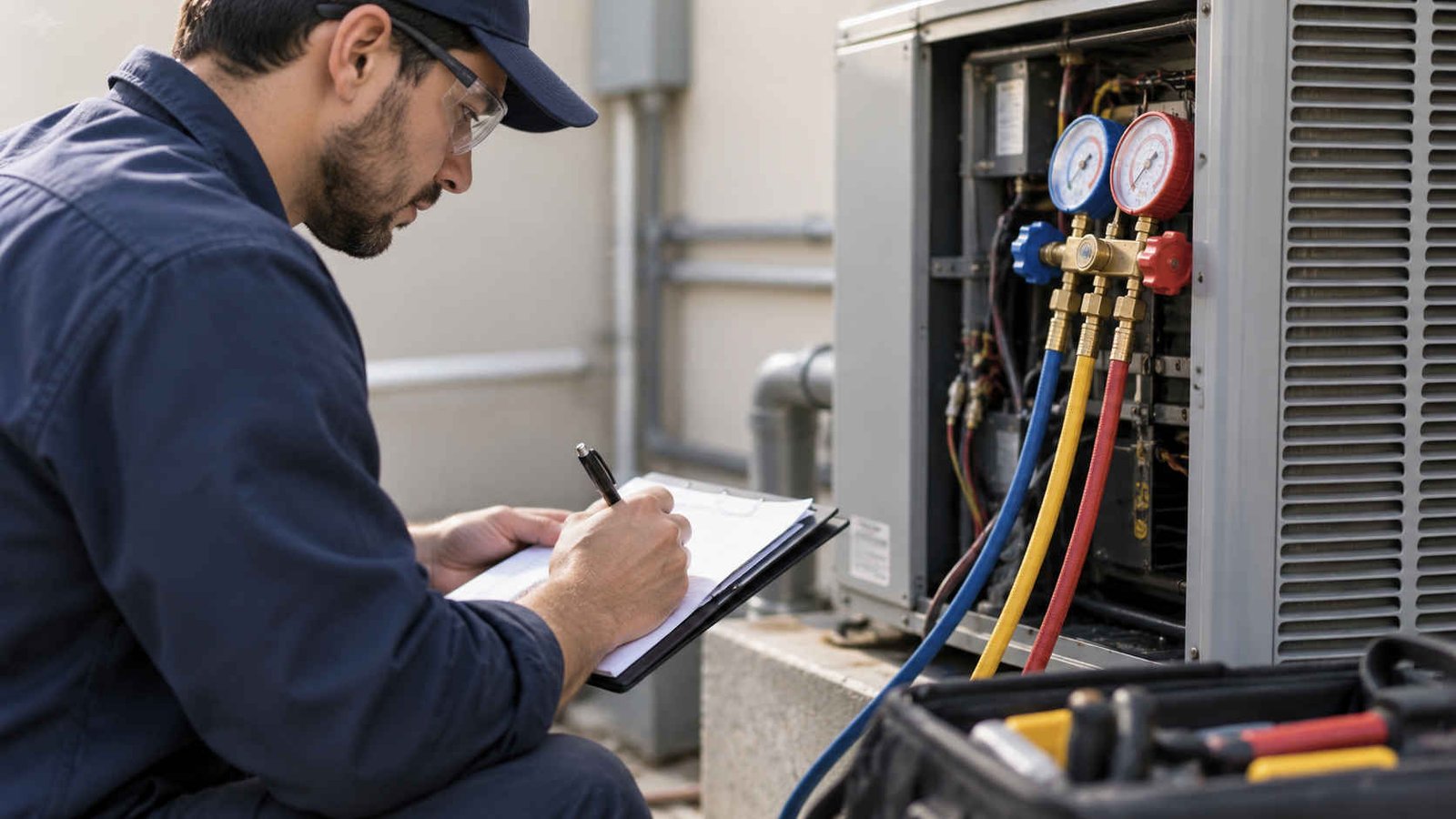
Preparing for an EPA test exam is one of the first major steps toward working with refrigerants in the HVAC industry. Whether you’re starting your HVAC career or preparing to expand your technical qualifications, understanding the EPA 608 examination is essential.
The EPA Section 608 certification test evaluates your knowledge of refrigerant regulations, recovery procedures, environmental protection, and equipment-specific servicing requirements.
But many candidates struggle with the same questions: What topics appear on the exam? How many questions are there? Which certification type should you take? And how can you prepare effectively?
In 2026, there is another important consideration: updated EPA 608 examination materials are available through certain testing organizations, making it especially important to prepare using materials that match your exam version.
This guide explains the EPA exam format, certification types, practice questions, important study topics, and a practical preparation strategy to help you get ready for your official certification test.
What Is the EPA Test Exam?
The EPA test exam generally refers to the Environmental Protection Agency’s Section 608 Technician Certification examination for HVAC and refrigeration technicians.
Under Section 608 of the Clean Air Act, technicians who perform covered activities involving regulated refrigerants must hold the appropriate certification.
This includes many technicians who maintain, service, repair, or dispose of refrigeration and air-conditioning equipment.
The examination tests knowledge of environmental regulations and safe refrigerant handling rather than general HVAC installation skills.
EPA 608 Exam at a Glance
| Exam Feature | Details |
|---|---|
| Certification | EPA Section 608 Technician Certification |
| Main subjects | Environmental regulations, refrigerant recovery, safety, equipment servicing |
| Exam sections | Core, Type I, Type II, Type III |
| Universal Certification | Core plus all three type-specific sections |
| Typical section length | 25 questions |
| Common passing standard | 70% per required section |
| Exam administration | EPA-approved certifying organizations |
| Certification expiration | Does not expire |
A commonly used EPA 608 examination format includes 25 questions for Core and 25 for each type-specific section. Candidates pursuing Universal Certification complete all four sections, typically totaling 100 questions.
The commonly used passing threshold is 70% for each required section, meaning at least 18 correct answers out of 25. Confirm the current scoring rules with your specific approved test provider.
If you are new to the certification process, start with the EPA 608 Certification Guide to understand the different credentials and their equipment coverage.
How to Prepare for Current EPA 608 Exam Requirements in 2026
EPA Section 608 certification examinations assess knowledge of refrigerant regulations, environmental protection, recovery procedures, safety, and equipment-specific servicing requirements.
Approved certifying organizations may update their examination materials and administrative procedures over time. Because exam formats and testing arrangements can vary, candidates should confirm the current requirements with their selected certifying organization before registering.
What Should You Review Before Taking the Exam?
Use the current U.S. EPA Section 608 test topics as the foundation of your preparation.
Focus on the following areas:
- Refrigerant recovery, recycling, and reclamation.
- Environmental regulations and refrigerant safety.
- Equipment-specific recovery and evacuation procedures.
- Pressure-temperature relationships where applicable.
- Core, Type I, Type II, and Type III examination requirements.
Avoid relying exclusively on outdated question collections or memorized answer sheets.
Understanding the technical principles behind each requirement will help you answer unfamiliar questions more effectively.
If you are pursuing Universal Certification, make sure your study plan includes all four required sections.
EPA 608 Certification Test Types Explained
The EPA certification exam is divided into four sections. Each section tests knowledge relevant to particular equipment categories or general refrigerant-handling requirements.
Core Exam: Refrigerant Regulations and Safety
The Core section covers fundamental principles that apply across Section 608 certification categories.
Important topics include:
- Ozone depletion and environmental effects of refrigerants.
- Refrigerant regulations under the Clean Air Act.
- Recovering, recycling, and reclaiming refrigerants.
- Refrigerant safety and protective equipment.
- Recovery cylinders and proper handling procedures.
- Basic refrigeration principles.
Because Core knowledge is required across certification categories, it is usually the best starting point for new candidates.
You can explore the EPA 608 Core Practice Test for detailed explanations and examples.
Type I Exam: Small Appliances
Type I covers qualifying small appliances that contain five pounds or less of refrigerant and meet the EPA’s factory-sealed appliance definition.
Examples include certain refrigerators, freezers, and window air-conditioning units.
Type I exam preparation should emphasize small-appliance recovery equipment, compressor conditions, and proper recovery techniques.
Reviewing the EPA Type I Practice Test can help you understand these specialized topics.
Type II Exam: High-Pressure Appliances
Type II applies to high-pressure and very-high-pressure appliances, excluding small appliances and motor vehicle air-conditioning systems.
This certification is particularly relevant for technicians working with residential central air conditioners, many heat pumps, and commercial refrigeration equipment.
Important subjects include leak detection, recovery and evacuation requirements, pressure-temperature relationships, and servicing safety.
Use the EPA Type II Practice Test to focus on high-pressure appliance knowledge.
Type III Exam: Low-Pressure Appliances
Type III focuses on low-pressure refrigeration equipment, including certain large commercial chillers.
Candidates should understand low-pressure recovery methods, evacuation requirements, purge units, and associated safety procedures.
These systems can operate below atmospheric pressure, creating different service challenges from those found in high-pressure equipment.
The EPA Type III Practice Test provides additional preparation for this category.
Universal EPA Certification Exam
Universal Certification covers all three appliance categories.
To earn this credential, you must pass Core, Type I, Type II, and Type III under the applicable exam requirements.
A crucial distinction is that an open-book Core result cannot be used toward Universal Certification. The Core examination must be proctored.
For technicians pursuing a broader HVAC/R career, Universal Certification can provide flexibility across more equipment categories.
EPA Practice Test: Sample Questions With Answers
Completing an EPA practice test is a useful way to identify knowledge gaps before scheduling the official examination.
The following five original sample questions are designed to illustrate important Section 608 concepts. They are educational examples, not questions copied from the official certification examination.
Question 1: EPA Core — Ozone Depletion
Which element found in CFC and HCFC refrigerants is primarily responsible for stratospheric ozone depletion?
A. Hydrogen
B. Chlorine
C. Nitrogen
D. Oxygen
Correct Answer: B. Chlorine
Explanation: Chlorine released from certain refrigerants can participate in chemical reactions that destroy ozone molecules in the stratosphere.
Understanding why refrigerants affect the ozone layer is a fundamental Core topic.
Question 2: EPA Core — Refrigerant Recovery
What does it mean to recover refrigerant?
A. Remove refrigerant and store it in an external container
B. Restore refrigerant to new product specifications
C. Remove all contaminants through chemical analysis
D. Convert liquid refrigerant into vapor for disposal
Correct Answer: A. Remove refrigerant and store it in an external container
Explanation: Recovery means removing refrigerant from an appliance and storing it in an external container without necessarily processing or testing it.
Recovery, recycling, and reclamation have distinct definitions under EPA refrigerant management rules.
Question 3: EPA Type I — Small Appliances
Which appliance generally fits the EPA Section 608 definition of a small appliance?
A. A commercial rooftop air-conditioning unit
B. A low-pressure centrifugal chiller
C. A factory-sealed household refrigerator containing less than five pounds of refrigerant
D. A commercial walk-in freezer with a field-installed refrigeration system
Correct Answer: C. A factory-sealed household refrigerator containing less than five pounds of refrigerant
Explanation: Small appliances must meet the EPA’s definition, which includes factory manufacturing, charging, hermetic sealing, and a refrigerant charge of five pounds or less.
Question 4: EPA Type II — Leak Testing
Which gas is appropriate for pressurizing a refrigeration system for leak testing when used according to equipment and safety requirements?
A. Oxygen
B. Compressed air
C. Dry nitrogen
D. Refrigerant intentionally vented into the atmosphere
Correct Answer: C. Dry nitrogen
Explanation: Dry nitrogen is commonly used for pressure testing because it is an inert gas. Oxygen and compressed air can create serious safety risks in refrigeration systems.
Technicians must follow the applicable manufacturer procedures and pressure limitations.
Question 5: EPA Universal — Certification Rules
Which statement about Universal Certification is correct?
A. Passing Type I alone grants Universal Certification
B. Universal Certification requires Core, Type I, Type II, and Type III
C. Open-book Core testing always qualifies for Universal
D. Universal Certification automatically expires every two years
Correct Answer: B. Universal Certification requires Core, Type I, Type II, and Type III
Explanation: Universal Certification requires successful completion of all four sections under the appropriate exam conditions.
An open-book Core examination cannot be used to obtain Universal Certification.
What Should You Learn From These Questions?
These examples cover some of the most important foundational concepts, but they represent only a small portion of the full examination outline.
If you struggled with the Core questions, review refrigerant regulations and environmental science first.
If the Type I, II, or III questions seem unfamiliar, concentrate on the corresponding equipment category.
The goal is not simply to remember five correct answers. It is to recognize the technical reasoning that can help you answer unfamiliar questions.
📊 How Ready Are You for the EPA 608 Core Exam?
Put your refrigerant knowledge to the test. Practice Core questions covering EPA regulations, ozone depletion, refrigerant recovery, and essential safety concepts before your official certification exam.
How Hard Is the EPA Certification Test?
The EPA 608 certification test requires knowledge of federal refrigerant regulations, technical procedures, and safe servicing practices.
Its difficulty depends on your HVAC experience, the certification category, and how effectively you prepare.
Candidates with hands-on refrigeration experience may already understand recovery equipment and common service procedures.
Beginners may need more time to learn technical terminology, pressure-temperature relationships, and equipment classifications.
Common Areas That Require Additional Study
Three areas often deserve particular attention:
1. Recovery and evacuation requirements
These requirements can differ according to refrigerant type, equipment category, charge size, and service circumstances.
Avoid memorizing a single recovery value and assuming it applies universally.
2. Refrigerant environmental properties
Candidates should understand the distinctions among CFCs, HCFCs, HFCs, and newer refrigerant categories, including ozone depletion and global warming characteristics.
3. Equipment-specific procedures
Type I, Type II, and Type III cover different equipment. The correct handling or recovery approach can vary significantly.
There is no reliable universal failure-rate percentage that can predict an individual candidate’s outcome. Practice performance is more useful for identifying your specific weaknesses.
How to Prepare for the EPA Test Exam: A Practical Study Plan
Effective preparation involves understanding the material, applying it to realistic situations, and reviewing your mistakes.
Step 1: Start With the Official Topic Categories
Review the Core material first, followed by the type-specific sections relevant to your certification goal.
Use the EPA 608 Study Guide to organize your preparation.
Step 2: Take a Diagnostic Practice Test
Before spending several days studying, complete an initial set of questions.
Use the results to identify whether you need more work on regulations, recovery, equipment categories, or safety.
A diagnostic practice test is not a substitute for the official certification examination. Its purpose is to guide your study time.
Step 3: Study Your Weakest Subjects
If you’re missing questions about recovery procedures, revisit the technical rules and compare the conditions described in each question.
If you’re struggling with refrigerant types, focus on understanding their properties and environmental characteristics.
This approach is generally more productive than repeating questions you already know.
Step 4: Practice Under Exam-Like Conditions
Once you understand the main topics, try answering questions without notes or other assistance.
Use a quiet environment and track how long you spend on each question.
For an exam that requires proctoring and closed-book conditions, getting comfortable without external references is useful preparation.
Step 5: Confirm Your Examination Version
Because updated ESCO Section 608 testing materials became available in August 2026, check which examination version your selected provider offers.
Use appropriately matched preparation materials where possible.
Do not assume a decades-old study sheet includes every current examination topic or regulatory development.
Step 6: Review Before Exam Day
During your final study session, concentrate on recurring errors rather than trying to learn entirely new subjects at the last minute.
Confirm the exam location or remote-testing arrangements, identification requirements, and any instructions from your certification provider.
EPA 608 Practice Test vs. Official Certification Exam
It is important to understand the difference between practice resources and the actual examination.
| Feature | EPA Practice Test | Official EPA Certification Exam |
|---|---|---|
| Main purpose | Learning and self-assessment | Qualification for certification |
| Question source | Educational practice content | Approved certifying organization’s secure exam |
| Answers and explanations | Often available during review | Governed by exam provider |
| Proctoring | Generally not required | Required for applicable examination formats |
| Certification issued | No | Yes, after meeting the requirements |
| Best time to use | During exam preparation | After adequate preparation |
Practice questions are valuable because they help you assess progress without consuming an official examination attempt.
However, a high practice score does not guarantee that you will pass the certification exam.
Likewise, failing a difficult practice session can be useful if it reveals what you need to study next.
Should You Take Type I, Type II, or Universal?
Your career goals should determine which exam sections you prioritize.
| Career Goal | Relevant Certification |
|---|---|
| Servicing qualifying small appliances | Type I |
| Working on many residential AC systems | Type II |
| Servicing low-pressure commercial chillers | Type III |
| Working across all Section 608 equipment categories | Universal |
For someone entering residential HVAC service, Type II may be an especially relevant starting point.
For a technician planning to work across residential, commercial, and industrial refrigeration, Universal Certification may provide broader equipment coverage.
Remember that EPA 608 certification is separate from state or local HVAC licensing requirements.
Common EPA Test Exam Preparation Mistakes
Mistake 1: Using Outdated Materials Without Checking the Exam Version
Older resources may still explain important concepts correctly, but examination updates can introduce changes in coverage or reference materials.
Confirm the version administered by your provider and prioritize accurate, relevant preparation resources.
Mistake 2: Studying Only One Section for Universal Certification
Universal candidates must prepare for Core, Type I, Type II, and Type III.
Strong performance in one section cannot replace passing the others.
Mistake 3: Memorizing Answers Without Understanding the Concepts
Practice questions are most useful when you study their explanations.
Understanding why a recovery procedure is appropriate can help with many different questions, not just one memorized example.
Mistake 4: Ignoring Safety Questions
Refrigerant handling involves pressure hazards, oxygen displacement, frostbite, and other risks.
Safety knowledge is an important part of EPA certification preparation and actual HVAC service work.
Mistake 5: Confusing Training With Certification
Online study resources may help you prepare, but official certification requires an examination administered by an EPA-approved certifying organization.
HVAC Exam Master provides independent exam preparation, not official EPA certification examinations.
Frequently Asked Questions About the EPA Test Exam
How Many Questions Are on the EPA 608 Exam?
A commonly used Section 608 exam format includes 25 questions for Core and 25 for each type-specific section. Universal candidates generally complete 100 questions across all four sections. Confirm the format with your approved provider.
What Score Do You Need to Pass the EPA Certification Test?
A commonly used passing standard is 70% on each required section, equivalent to at least 18 correct answers out of 25. Always verify the current scoring policy with your examination provider.
Is the EPA Practice Test the Same as the Real Exam?
No. Practice questions are designed to help candidates review relevant concepts. They should not be treated as copies of the official examination or as a guarantee of passing.
Can I Take an EPA Exam Online?
Yes. Some EPA-approved certifying organizations offer remote or online examinations. The available arrangements depend on the provider and certification type.
Does the EPA Certification Exam Expire?
EPA Section 608 Technician Certification credentials do not expire under current federal requirements. Technicians must still follow applicable regulations as they change.
Can I Take the EPA Test Without HVAC Experience?
There is no general EPA Section 608 work-experience prerequisite for taking the certification examination. However, studying the technical concepts thoroughly is important, particularly for candidates without hands-on experience.
Which EPA Practice Test Should I Take First?
Start with Core because it covers environmental regulations, refrigerant safety, and recovery principles shared across certification categories. Then move to Type I, Type II, or Type III according to your examination goal.
Final Thoughts: Prepare for Your EPA 608 Exam With Confidence
Preparing for the EPA test exam in 2026 involves more than memorizing multiple-choice answers.
Understanding refrigerant regulations, recovery procedures, equipment categories, and technical safety requirements will help you approach unfamiliar questions more effectively.
Start with Core, study the certification sections relevant to your career, and use practice questions to identify the subjects that need additional review.
Remember to verify your official examination provider, confirm which exam version you’re taking, and use preparation materials that match your certification goals.
🎯 Ready for More EPA 608 Practice Questions?
Build your exam preparation around the certification you need. Open HVAC Exam Master to explore EPA 608 Core, Type I, Type II, and Type III study modules, practice questions, and targeted review.

0 Comments