Top Trade Schools in Colorado Springs & Reno NV: HVAC Training for Cold Climates

Training for the Cold: Not Your Average HVAC Career
Are you researching the best vocational schools in colorado springs or looking for trade schools in reno nv to start your HVAC career? You are entering a highly specialized and incredibly lucrative market.
When most people think of the HVAC industry, they picture a technician fixing a broken air conditioner in the sweltering heat of Texas or Florida. In the Sunbelt, a broken AC is uncomfortable.
But in the Rocky Mountains or the Sierra Nevada, a broken heating system in January is a catastrophe. If a furnace dies in Colorado when it is 10°F outside, the house freezes, the water pipes burst, and thousands of dollars in water damage occur overnight.
Because the stakes are so high, technicians in cold, high-altitude climates must possess a completely different skill set than those in the South.
In this 2026 guide, we will break down exactly what you need to look for when choosing a trade school in these regions, the unique physics of high-altitude heating, and how to master the electrical troubleshooting required to keep the heat on.
📊 Test Your Heating Logic
Heating systems rely heavily on complex safety circuits. Take our diagnostic quiz to see if your electrical troubleshooting skills are ready for the winter rush.
The “High-Altitude” Factor in Colorado and Nevada
Air conditioning relies on thermodynamics. Heating relies on combustion. Both of these are drastically affected by altitude.
Colorado Springs sits at an elevation of over 6,000 feet. Reno sits at roughly 4,500 feet. At these elevations, the air is thin. There is significantly less oxygen available per cubic foot than there is at sea level.
When evaluating vocational schools in colorado springs, you must ensure their curriculum heavily covers these two critical concepts:
1. High-Altitude Derating for Gas Furnaces
You cannot take a gas furnace designed for sea level and turn it on in the mountains. Because there is less oxygen, the air-to-gas fuel mixture will be dangerously rich. This causes incomplete combustion, soot buildup, and deadly Carbon Monoxide (CO) production.
Technicians in these areas must learn how to “derate” a furnace. This involves reducing the manifold gas pressure and installing smaller burner orifices to match the thinner air. It is a precise mathematical and mechanical skill.
2. Heat Pump Defrost Cycles
According to the Department of Energy, modern cold-climate heat pumps are incredibly efficient. However, in freezing environments, the outdoor coil will literally turn into a block of ice.
Technicians must master the complex electrical sequence of the “Defrost Cycle.” You must understand how to test defrost sensors, reversing valves, and control boards. If you cannot read an electrical schematic, you cannot fix a frozen heat pump.
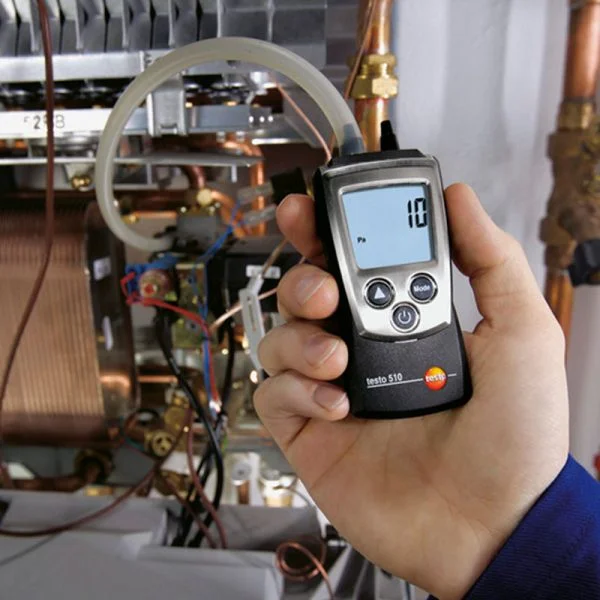
Evaluating Vocational Schools in Colorado Springs
The HVAC salary potential in Colorado is excellent, largely because the state experiences both hot summers and freezing winters. Technicians here must be masters of both cooling and heating.
If you are touring vocational schools in colorado springs, do not let them just show you a row of air conditioning condensers. Ask them about their heating labs.
Green Flags to Look For:
- Hydronics Training: Do they teach boiler systems and radiant floor heating? Hot water systems are extremely common in mountain homes.
- Combustion Analysis: Do they train students using digital combustion analyzers to test flue gases for safety and efficiency?
- Electrical Labs: Heating failures are predominantly electrical. You need extensive practice wiring transformers, limit switches, and flame sensors.
What to Look for in Trade Schools in Reno NV
Reno presents a unique challenge. Located in the high desert of the Sierra Nevada, it is a city of extremes. You might see 105°F in July and 15°F in January.
When looking into trade schools in reno nv, you are training to become a “Dual-Threat” technician. You will face the grueling attic heat in the summer while fixing ACs, and you will deal with freezing rooftops in the winter repairing commercial gas packs.
The best trade schools in reno nv will emphasize advanced diagnostics. You cannot survive in this market if you are just a “parts changer.” The extreme temperature swings cause electrical components (like capacitors and contactors) to fail at a rapid rate. You must be an expert with a multimeter.
🛠️ Don’t Guess on Electrical Faults
Heating troubleshooting is 80% electrical. Practice diagnosing broken limit switches and faulty gas valves using our interactive simulator.
The Mandatory Certifications You Still Need
It is easy to get focused on the heating side in these cold climates, but you cannot forget the federal law.
Even if you intend to spend your career fixing boilers in the mountains, you still legally must hold an EPA 608 Universal Certification to handle refrigerants for air conditioners and heat pumps.
The <a href=”https://www.epa.gov/section608″ target=”_blank” rel=”dofollow”>Environmental Protection Agency</a> mandates this for all technicians nationwide. Smart students do not wait for their school to teach them this material. They use online simulators to master the mandatory leak rates and recovery rules before they enroll.
Once you have your EPA card and start working, your next goal should be the NATE Gas Heating Certification. Holding a NATE badge proves to employers that you understand the deadly physics of combustion and carbon monoxide safety, instantly making you one of the most valuable technicians in the company.
Conclusion: Prepare for the Winter Rush
The HVAC market in the mountains and high deserts is not for the weak. It requires a deep understanding of thermodynamics, high-altitude physics, and complex electrical circuits.
Whether you choose to attend one of the top vocational schools in colorado springs or explore your options among the trade schools in reno nv, remember that your education is in your own hands. The school provides the tools, but you must build the knowledge.
Ready to dominate the winter rush?
Don’t wait until you are staring at a flashing error code on a freezing night. Start building your electrical troubleshooting logic today with our comprehensive, scenario-based practice tools.
📱 Master Heating & Electrical Logic
Access 1,500+ updated questions for the EPA and NATE Gas Heating exams directly in your browser. Start securing your next pay raise today.


0 Comments