The 5 Best Certifications to Become an HVAC Technician in 2026
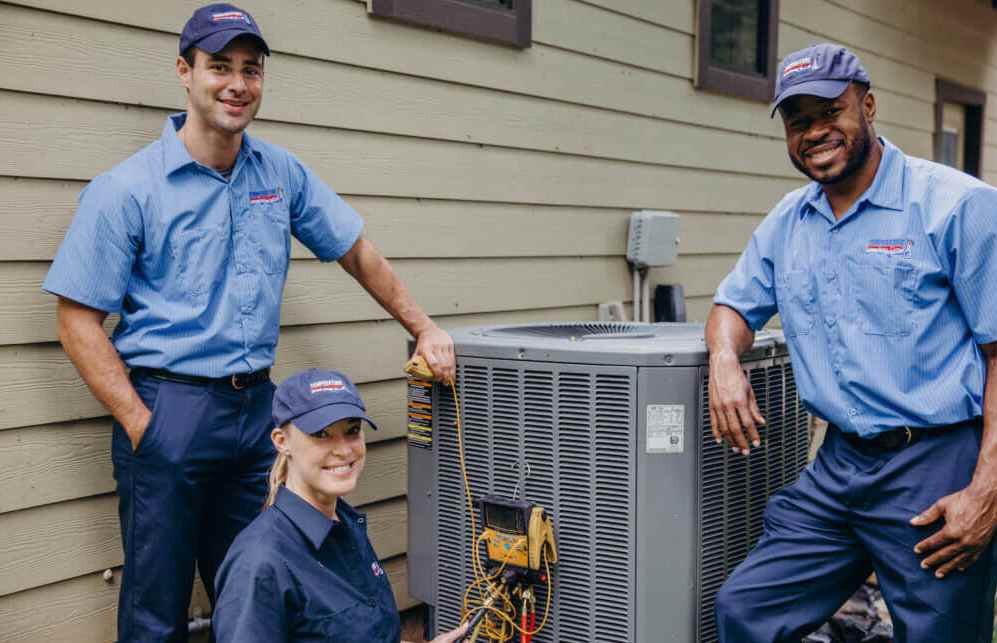
The Certification Roadmap: Don’t Do It Backwards
Are you searching for the best certifications to become an hvac technician and launch a high-paying career? You have come to the exact right place.
The HVAC industry loves acronyms. When you browse job postings, you will see employers demanding EPA, NATE, OSHA, and state licenses. For a beginner, it is incredibly confusing. If you try to study for all of them at once, or if you tackle them in the wrong order, you will waste months of your time and hundreds of dollars in exam fees.
Not all pieces of paper are created equal. Some are required by federal law just to touch a tool, while others are voluntary badges of honor used to negotiate a six-figure HVAC salary.
In this 2026 guide, we are going to clear up the confusion. We have ranked the exact roadmap of credentials you need. Here are the 5 best certifications to become an hvac technician, ordered from the absolute first step to the ultimate master level.
📊 Do You Have the Baseline Skills?
Certifications require strong thermodynamic and electrical logic. Take our quick diagnostic quiz to see if you are ready to start testing.
#1 The Absolute Requirement: EPA 608 Universal Certification
If you are making a list of the best certifications to become an hvac technician, this one permanently sits at the number one spot. Why? Because it is federal law.
Under the Clean Air Act, the Environmental Protection Agency (EPA) mandates that anyone who maintains, services, or repairs air conditioning and refrigeration equipment must be certified.
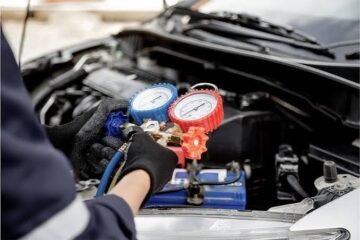
If you hook up a set of manifold gauges to a system containing regulated refrigerants without this card, you and your employer face massive federal fines.
What you need to know:
- There are four levels: Core, Type I (Small Appliances), Type II (High Pressure), and Type III (Low Pressure).
- The Goal: You want the Universal Certification, which means passing all four sections. This makes you instantly employable by any residential or commercial contractor.
- Learn more: Read our complete EPA 608 Study Guide to understand the mandatory leak rates and dates you must memorize.
#2 The Hiring Advantage: OSHA 10 Construction
While the EPA card proves you won’t harm the environment, the OSHA 10 card proves you won’t harm yourself.
The Occupational Safety and Health Administration (OSHA) 10-Hour Construction training is not an HVAC-specific test, but it is one of the most critical credentials for a green helper.
Why it matters:
HVAC is a dangerous trade. You deal with high-voltage electricity, extension ladders, explosive gases, and extreme heat. Commercial job sites often strictly require every worker to hold a valid OSHA 10 card before they can even step foot on the property.
If you earn this certificate online before your job interview, you signal to the service manager that you are safety-conscious, saving the company the time and money of training you themselves.
#3 The Salary Multiplier: NATE Certification
Once you have your EPA card and have spent a year or two in the field, it is time to level up.
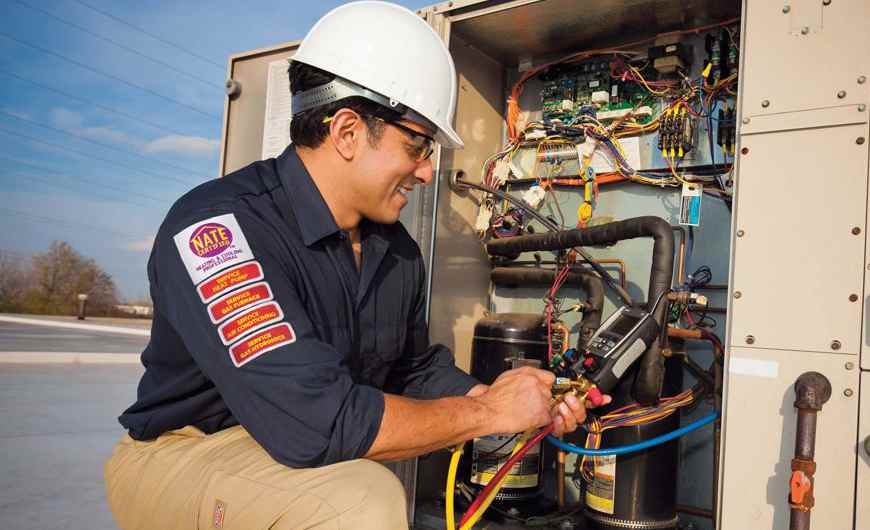
NATE (North American Technician Excellence) is entirely voluntary. However, it is widely considered the gold standard of technical competence. If you ask veteran mechanics about the best certifications to become an hvac technician, NATE is almost always their top recommendation for boosting your pay.
Why it matters:
The EPA exam tests regulations. The NATE exam tests actual troubleshooting skills. It presents you with difficult, scenario-based questions (e.g., diagnosing a faulty heat pump reversing valve).
Contractors love NATE-certified techs because they don’t misdiagnose systems, which prevents expensive callbacks. Walking into a performance review with a NATE badge is the easiest way to demand a $5 to $10 per hour raise.
Learn more: Check out our deep dive into the NATE Certification Process.
🛠️ Don’t Fail the NATE Exam
NATE questions are scenario-based and heavily focused on electrical theory. Stop reading books and start practicing real diagnostic faults today.
#4 The Legal Boss: State Journeyman License
After you log roughly 4,000 to 8,000 hours of on-the-job training (depending on your state), you are eligible for the ultimate legal credential: the Journeyman License.
While technically a “license” rather than a voluntary certification, this is the milestone that transforms you from an apprentice into an independent mechanic.
Why it matters:
Holding a state license (such as those issued in Texas, Connecticut, or Florida) proves you understand local building codes, the International Mechanical Code (IMC), and the National Electrical Code (NEC).
Licensed journeymen can run service trucks independently, pull permits, and eventually transition into business ownership as Master Contractors. The exam is typically open-book, but heavily timed and extremely stressful.
Learn more: See how to pass your state exams in our Journeyman License Prep Guide.
#5 The Niche Money Maker: Manufacturer Certifications
Once you have secured the first four credentials on this list, your final step is specialization.
Manufacturers (like Carrier, Trane, Mitsubishi, or Daikin) offer highly specialized certifications for their specific equipment.
Why it matters:
The industry is moving aggressively toward complex, high-efficiency equipment. Technologies like VRF (Variable Refrigerant Flow), communicating thermostats, and commercial chillers require proprietary software to diagnose.
If you hold a factory certification for VRF systems, you become a rare and highly sought-after commodity in the commercial HVAC space. These are the technicians earning over $120,000 a year.
H2: Frequently Asked Questions (FAQ)
Q: Do I need all of these to get my first job?
A: No. To get hired as an entry-level helper or apprentice, you typically only need your EPA 608 Universal Certification. The other credentials will be earned as you progress in your career.
Q: How much does it cost to get certified?
A: The EPA 608 usually costs between $25 and $150. NATE exams typically cost $130 to $150 per section. State licenses vary widely by jurisdiction. To avoid wasting money on retake fees, use an HVAC practice test app to prepare thoroughly before paying the proctor.
Q: Can I take these certification exams online?
A: You can take the EPA Type I online unproctored. However, the EPA Universal and NATE exams must be proctored. In 2026, many approved organizations offer secure, live-webcam proctoring so you can take the exams from home.
Conclusion: Build Your Credential Stack Today
When planning your career, you must prioritize.
The list of the best certifications to become an hvac technician is not a buffet where you pick randomly. It is a ladder.
Start with the federal law (EPA 608). Protect yourself (OSHA 10). Prove your technical mastery (NATE). And finally, secure your legal independence (Journeyman License).
Do not let the fear of multiple-choice exams slow down your career progression. The physics, the math, and the mechanical codes are completely masterable if you use the right study tools.
Ready to start climbing the ladder?
Skip the outdated textbooks. Start practicing the exact scenarios you will face on the EPA and NATE exams using our advanced simulation platform.
📱 Prep Smart, Pass Fast
Access 1,500+ updated questions covering the exact topics found on the EPA 608 and NATE certification exams. Guarantee your passing score today.

0 Comments