Role of Auxiliary Electric Heating in Air-Source Heat Pump Systems: Technical Requirements and Operation
Introduction
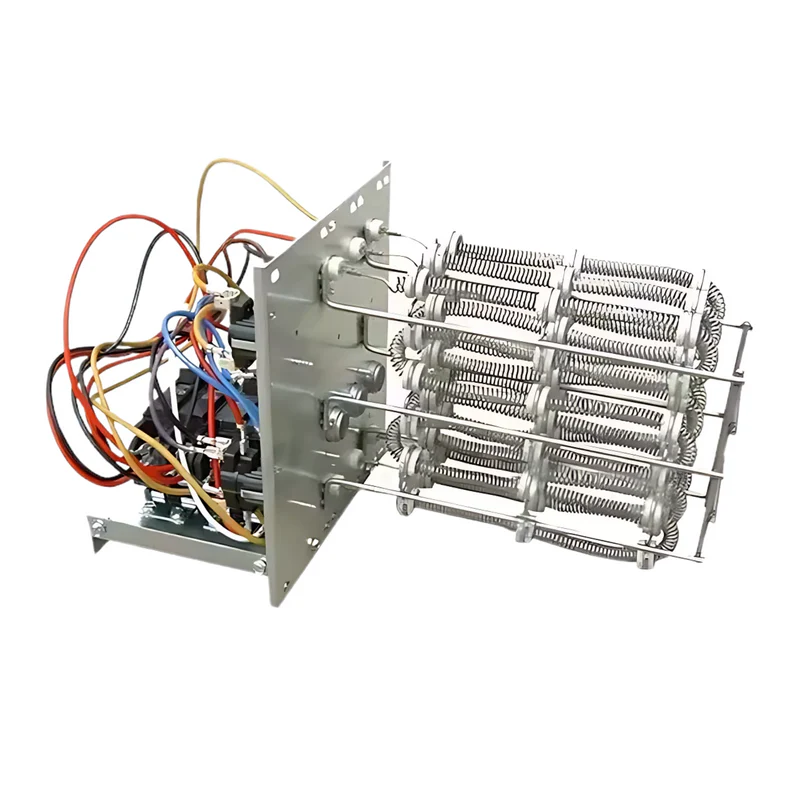
The technical integration of Auxiliary Heat in Heat Pump Systems represents a critical engineering solution for maintaining residential comfort in cold climates. While modern air-source heat pumps (ASHPs) offer exceptional seasonal efficiency, the fundamental physics of the refrigeration cycle dictates that heating capacity diminishes as ambient temperatures drop. This guide provides a detailed analysis of how supplemental heating elements bridge the performance gap during extreme weather events.
The Thermodynamics of Heat Pump Limitations
To understand the need for electric heaters, one must first grasp the concept of the Coefficient of Performance (COP). A heat pump’s COP is the ratio of heating provided to the electricity consumed.
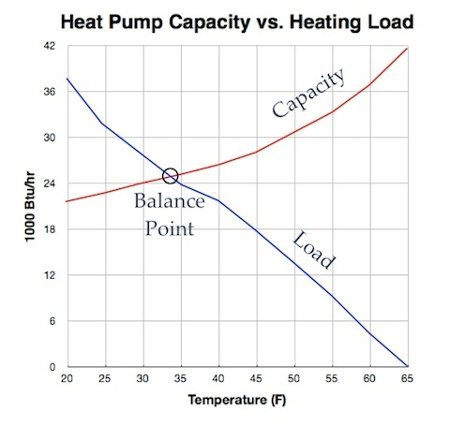
At 8°C (47°F), a high-efficiency ASHP might have a COP of 4.0. However, as the temperature drops toward -15°C(5°F), the refrigerant’s evaporation temperature must be even lower to absorb heat from the outside air. This results in a lower mass flow rate and higher compression ratios, which significantly reduces the system’s total heating output. When the outdoor temperature falls, the building’s heat loss (load) increases linearly, while the heat pump’s output decreases.
The Thermal Balance Point and Economic Balance Point
In HVAC engineering, the Thermal Balance Point is the precise outdoor temperature at which the heat pump’s maximum output exactly matches the building’s heat loss.
- Operation above the Balance Point: The heat pump operates independently to meet the thermostat demand.
- Operation below the Balance Point: The heat pump continues to run, but cannot maintain the setpoint temperature alone. At this stage, the electric resistance heaters are energized in “stages” to provide the required supplemental British Thermal Units (BTUs).
Additionally, the Economic Balance Point is considered. In some jurisdictions with tiered electricity pricing or high-efficiency requirements, it may be more cost-effective to switch to auxiliary heat earlier, though electric resistance is technically less efficient (COP of 1.0) than a running heat pump.
Management of the Defrost Cycle
One of the most frequent applications of electric heaters occurs during the Defrost Cycle. When outdoor temperatures are between $-2^\circ C$ and $4^\circ C$ with high humidity, frost accumulates on the outdoor evaporator coil, acting as an insulator and choking airflow.
To clear this frost, the system initiates a defrost cycle:
- Reversing Valve Shift: The system temporarily switches into cooling mode.
- Heat Rejection: Thermal energy is taken from the indoor air and sent to the outdoor coil to melt the ice.
- Indoor Comfort Mitigation: Without supplemental heat, the indoor air handler would blow $10^\circ C – 15^\circ C$ air into the living space, causing significant discomfort (the “Cold Blow” effect).
To prevent this, the heat pump control board energizes the electric heat strips simultaneously with the defrost mode to “temper” the air, maintaining a neutral or warm discharge temperature.
Supplemental Heat Control Strategies
Modern HVAC systems do not simply turn the electric heat “on” or “off.” They use sophisticated control logic:
- Staged Resistance: Heaters are often installed in 5kW, 10kW, or 15kW banks. The thermostat or control board energizes only the necessary amount of resistance to meet the load.
- Outdoor Thermostats: These prevent the electric heaters from coming on above a certain temperature (e.g., $4^\circ C$), ensuring maximum energy savings.
- Pulse Width Modulation (PWM): Some high-end electric heaters use SCR (Silicon Controlled Rectifier) controllers to modulate the heat output precisely, rather than simple relay switching.
Emergency Heat (E-Heat) Mode
A distinction must be made between Auxiliary Heat and Emergency Heat.
- Auxiliary Heat runs automatically alongside the compressor to help when it is too cold.
- Emergency Heat is a manual setting on the thermostat that locks out the compressor entirely. This is used if the outdoor unit’s fan motor fails, the compressor seizes, or the refrigerant leaks. In this mode, the electric resistance heaters provide 100% of the building’s heating needs. While expensive to operate, this prevents the home from freezing during mechanical failures.
Installation and Safety Requirements
The integration of electric heaters requires adherence to strict electrical codes (such as NEC in the United States).
- Overcurrent Protection: Since electric heaters draw significant current (often 30-60 Amps), they require dedicated circuit breakers.
- Airflow Requirements: Electric strips require a minimum CFM (Cubic Feet per Minute) to prevent overheating. If the blower motor fails while the strips are energized, Thermal Limit Switches must be in place to cut power instantly and prevent a fire hazard.
Conclusion
While air-source heat pumps are highly efficient, they are not standalone solutions in temperate or cold climates. The inclusion of electric resistance heaters as a supplemental source is a technical requirement to bridge the gap at the thermal balance point and to maintain comfort during defrost cycles. Understanding the interplay between the vapor-compression cycle and electric resistance heating is essential for HVAC technicians and system designers to ensure both energy efficiency and operational reliability.

0 Comments