The Best 760 Micron to PT Chart Guide: Understanding Deep Vacuum in HVAC
The Biggest Misconception in HVAC
Are you looking for a reliable 760 micron to pt chart to understand exactly how deep vacuums work in HVAC systems? You are in the right place. If you ask an entry-level technician why we pull a vacuum on an air conditioning system, 90% of them will give you the same answer: “To suck the air out of the pipes.”
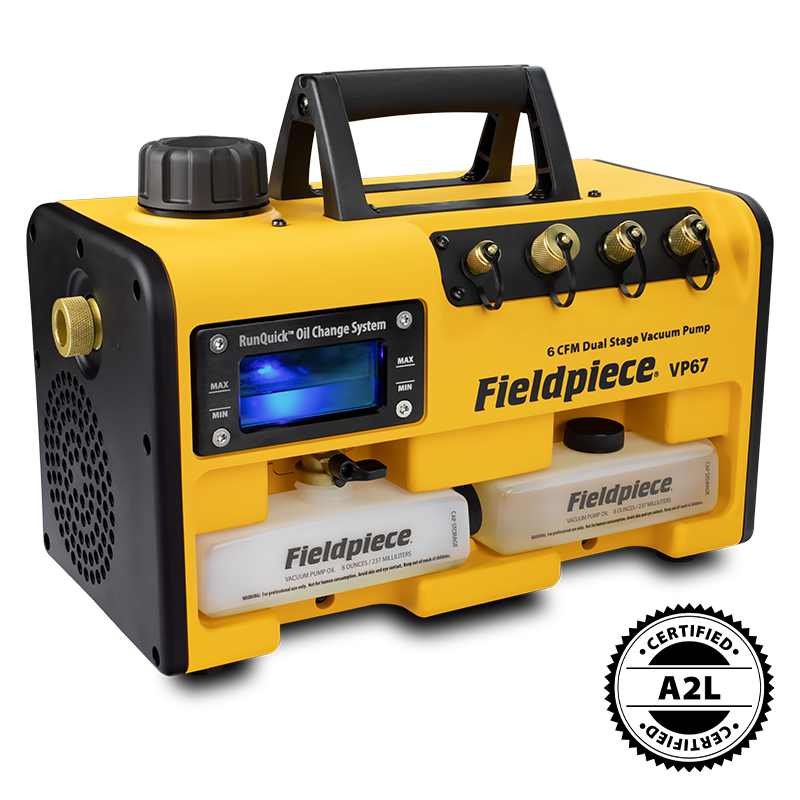
That answer is only half right, and it is the reason why so many compressors die premature deaths. We do not just pull a vacuum to remove non-condensable air. We pull a vacuum to boil water at room temperature.
Moisture is the number one enemy of a refrigeration system. When water mixes with POE oil and refrigerant, it creates a deadly, highly acidic sludge that eats away at the compressor windings from the inside out. To get that liquid water out of a sealed copper pipe, we have to lower the pressure inside the pipe until the water literally boils into a vapor and is sucked out by the vacuum pump.
To do this successfully, you must understand the physics of pressure and temperature. In this 2026 technical guide, we will provide you with a highly accurate 760 micron to pt chart for water, explain how to convert these complex measurements, and show you why hitting a deep vacuum is the ultimate test of a professional technician.
📊 Test Your Core Physics
Do you know the required evacuation levels for low-pressure systems? Take a quick diagnostic quiz to verify your EPA knowledge.
Understanding Microns and the Water PT Chart
When you look at a standard manifold gauge, the low side measures pressure in “Inches of Mercury” (inHg) for a vacuum. But inHg is practically useless for measuring deep vacuums.
A standard analog gauge cannot tell you if there is a single drop of microscopic water left in the system. That is why professionals use Microns.
Standard atmospheric pressure (sea level) is approximately 14.7 PSI, which translates to roughly 760,000 Microns.
When a technician references a 760 micron to pt chart, they are looking at exactly what happens to water when the pressure is dropped to 1/1000th of standard atmospheric pressure. At 760 microns (which is exactly equal to 1 Torr), water boils at a freezing -4°F.
Here is the essential 760 micron to pt chart that demonstrates the boiling point of water at different vacuum depths:
| Absolute Pressure (Microns) | Boiling Point of Water (°F) | Boiling Point of Water (°C) |
| 760,000 (Atmosphere) | 212.0°F | 100.0°C |
| 25,400 (1 inHg) | 78.0°F | 25.5°C |
| 10,000 | 52.0°F | 11.1°C |
| 5,000 | 35.0°F | 1.6°C |
| 1,000 | 1.0°F | -17.2°C |
| 760 | -4.0°F | -20.0°C |
| 500 | -11.0°F | -23.8°C |
By using this 760 micron to pt chart, you can clearly see the physics at work. If it is 52°F outside in the winter, and you only pull a vacuum down to 10,000 microns, the water inside the pipes will never boil. It will remain a liquid sludge.
Demystifying Microns Vacuum Conversion
A major hurdle for technicians studying for their certification exams is understanding how different pressure scales interact. You will frequently be asked to perform a microns vacuum conversion on your exams.
Here is the cheat sheet you need to memorize for field diagnostics:
Microns to Torr
The term “Torr” is heavily used in industrial refrigeration and science labs. The conversion is incredibly simple: 1 Torr equals exactly 1,000 Microns.
Therefore, atmospheric pressure (760 Torr) is 760,000 Microns. When you look at your 760 micron to pt chart, you are looking at the boiling point of water at exactly 0.76 Torr.
Microns to PSI
This is where people get confused. PSI (Pounds per Square Inch) is great for positive pressure, but terrible for deep vacuums.
If you try to convert 500 microns to psi, the number is almost incomprehensibly small. Atmospheric pressure is 14.7 PSI. 500 microns equals roughly 0.0096 PSI.
You absolutely cannot read 0.0096 PSI on an analog gauge. This is precisely why a dedicated, high-quality digital micron gauge is the most important tool in your bag.
🛠️ Stop Guessing on Exam Day
Do you know the exact evacuation levels required by federal law? Practice the actual EPA certification scenarios using our interactive simulator.
Why 500 Microns is the Industry Standard
Every major HVAC manufacturer (like Carrier, Trane, and Lennox) explicitly states in their installation manuals that a system must be evacuated to a minimum of 500 Microns.
Why 500? If you reference the 760 micron to pt chart again, you will see that at 500 microns, water boils at roughly -11°F.
Since you will almost never work on an air conditioning system in an environment colder than -11°F, pulling the system down to 500 microns guarantees that 100% of the moisture inside the copper tubing has violently boiled into a vapor and been sucked out by your pump.
If your micron gauge stops at 1,500 and refuses to drop further, you have a problem.
You either have a microscopic leak (drawing outside air in), or you still have liquid water boiling off inside the system (off-gassing).
The Law: Federal Evacuation Requirements
Understanding a microns vacuum conversion is not just about being a good mechanic. It is the law.
Under the federal Clean Air Act, enforced by the Environmental Protection Agency (EPA), technicians must follow strict evacuation procedures before opening a system for repair.
If you are preparing to take your certification exam, you will be heavily tested on this. You must know the exact vacuum levels required based on the size of the appliance and the type of refrigerant being used.
For example, when working on a massive low-pressure chiller (Type III), the evacuation rules are entirely different because the system already operates in a vacuum.
Do not wait until the night before the exam to memorize these numbers. We highly recommend reviewing our comprehensive EPA 608 Practice Test Guide to ensure your knowledge of federal recovery codes is flawless.
Frequently Asked Questions (FAQ)
Q: Can I use manifold gauges to pull a deep vacuum?
A: No. Analog manifold gauges cannot measure a deep vacuum accurately. You must use a dedicated, standalone digital micron gauge placed as far away from the vacuum pump as possible to get a true system reading.
Q: What happens if I don’t pull a vacuum below 500 microns?
A: If moisture is left in the system, it will mix with the refrigerant oil to form acid. This acid will eat the insulation off the compressor windings, eventually causing a catastrophic electrical short to ground (a “burnout”).
Q: How do I calculate 500 microns to psi for the EPA exam?
A: You will rarely need to convert 500 microns to psi on the exam because it equals a virtually unreadable 0.0096 PSI. The exam will test your knowledge in absolute Microns or inches of Mercury (inHg).
Conclusion: Master the Physics of the Trade
Anyone can braze a copper pipe or swap out a contactor. But the highest-paid technicians in the industry are the ones who understand the invisible physics happening inside the sealed system.
When you understand the 760 micron to pt chart, you stop being a guessing mechanic and start being a true diagnostician. You understand exactly why your vacuum pump sounds the way it does, and you can guarantee a moisture-free system for your customers.
Ready to prove your technical mastery?
These advanced thermodynamic concepts are the exact reasons why so many technicians fail their NATE and EPA exams on the first try. Don’t be a statistic.
📱 Ace Your Industry Certifications
Access 1,500+ updated questions covering the exact topics found on the EPA 608 and NATE certification exams. Build your confidence and pass today.

0 Comments