The Best R290 PT Chart: HVAC Safety & Troubleshooting Guide
The Dangerous Shift to A3 Refrigerants
Are you staring at a commercial reach-in cooler, trying to find an accurate r290 pt chart to check the system pressure? Stop what you are doing and read this carefully.
The HVACR industry has changed forever. Because of strict EPA environmental regulations aimed at phasing out high-GWP (Global Warming Potential) hydrofluorocarbons like R-404A and R-134a, manufacturers have made a massive pivot.
The new king of light commercial refrigeration is R-290.
But what exactly is R-290? It is highly purified propane. It is classified as an A3 Refrigerant, which means it is highly flammable and potentially explosive if handled incorrectly. You cannot treat this chemical like standard Freon. If you hook up your standard manifold gauges and a traditional vacuum pump without understanding the safety protocols, you are putting your life at risk.
In this 2026 technical guide, we will provide you with the exact pressure references you need, break down the strict safety rules you must follow, and show you how to safely troubleshoot these volatile systems.
📊 Test Your Safety Knowledge
Do you know the difference between A2L and A3 safety protocols? Take a quick diagnostic quiz to verify your federal code knowledge before you touch a live system.
The Official R290 PT Chart
Unlike blended refrigerants (such as MO99 or R-400 series) that experience temperature glide, R-290 is a pure compound. This makes your job slightly easier because you do not have to worry about separate bubble points and dew points. The liquid and vapor pressures are the same at saturation.
Whenever you are working on a commercial ice machine, beverage cooler, or supermarket reach-in, keep this r290 pt chart handy.
(Pro Tip: Bookmark this page on your phone so you always have a reliable pt chart r290 reference in the field).
| Temperature (°F) | R-290 Pressure (PSIG) | Temperature (°F) | R-290 Pressure (PSIG) | |
| -10° | 16.5 | 50° | 76.2 | |
| 0° | 23.5 | 60° | 92.5 | |
| 10° | 31.3 | 70° | 110.8 | |
| 20° | 40.4 | 80° | 131.6 | |
| 30° | 50.8 | 90° | 154.9 | |
| 40° | 62.7 | 100° | 181.1 |
How to Use the R290 Pressure Temperature Chart
You will use this r290 pressure temperature chart exactly how you use standard charts, but with a heightened sense of precision.
Because R-290 systems usually have incredibly small, critical charges (often less than 150 grams), even a tiny variance in pressure indicates a massive problem.
Calculating Superheat
Attach your low-loss fittings to the suction side. Read your suction pressure. Let’s say your gauge reads 40.4 PSIG. According to the r290 pressure chart above, your saturation temperature is 20°F.
Next, use your pipe clamp thermometer on the suction line. If the line temperature is 30°F, your superheat is 10°F.
Need to brush up on this math? Review our comprehensive guide on How to Calculate Superheat.
3 Golden Rules for Servicing R-290 Systems
You have the chart, and you know the math. Now, you must respect the physics.
Propane is highly combustible. If an electrical contactor arcs while you have a refrigerant leak, it can cause a catastrophic explosion. According to OSHA chemical safety guidelines, working with A3 refrigerants requires a completely upgraded toolset.
1. You Must Use Spark-Proof Tools
Throw your standard vacuum pump and recovery machine out the window when working on these units.
Any electrical tool you use near an R-290 system must be rated as spark-proof or explosion-proof. This includes your leak detectors. Using a standard brushed motor vacuum pump can ignite lingering propane vapors in the air.
2. The Purge and Vent Rule
Because the total charge is usually incredibly small (less than 5 ounces), the EPA often allows technicians to safely vent R-290 into the outside atmosphere using a highly ventilated hose, rather than recovering it.
However, you must push dry nitrogen through the system to purge any remaining flammable gas before you unbraze a compressor. Never apply a torch to an R-290 line without thoroughly purging it first.
3. Precision Gram-Level Charging
You cannot “gas and go” with R-290.
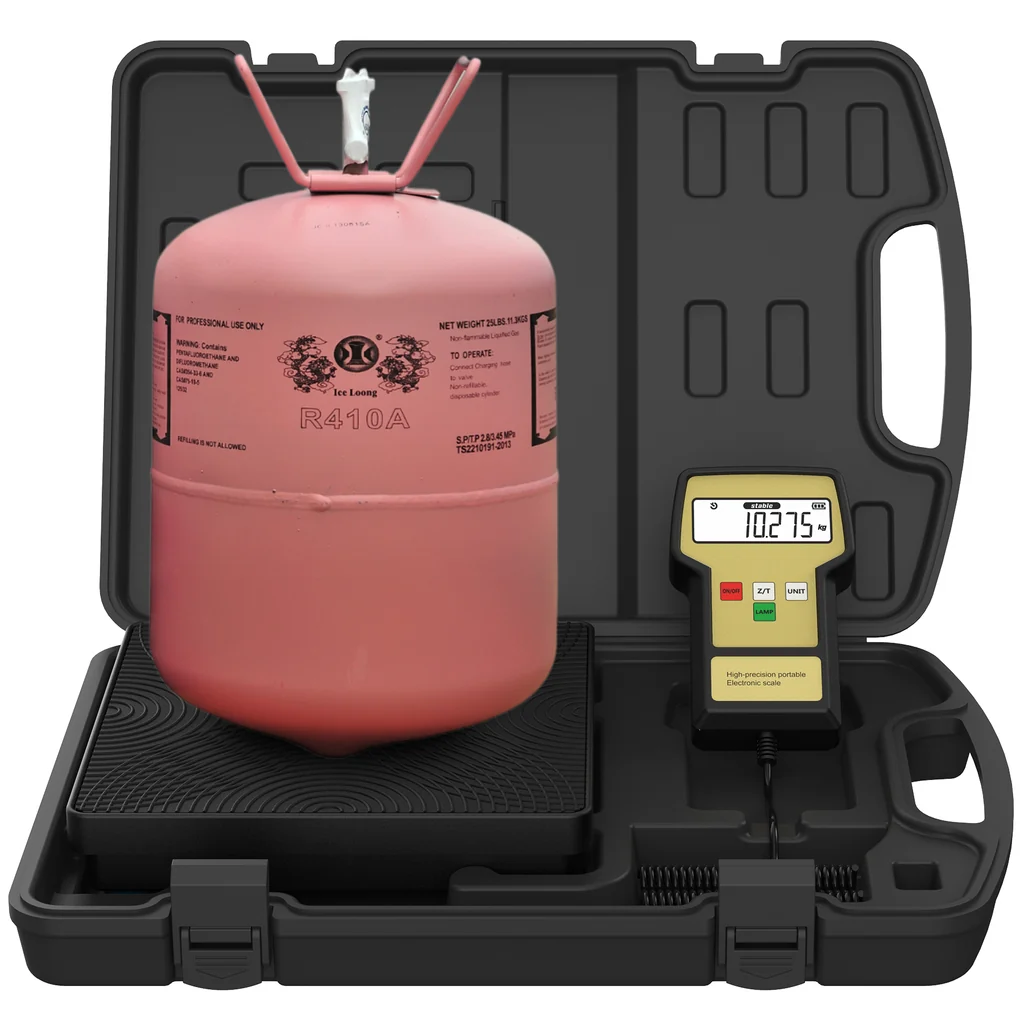
These systems do not have receivers to hold extra refrigerant. They are critically charged. You must use a highly sensitive digital scale that measures in grams, not just ounces. Being off by 10 grams can completely ruin the system’s efficiency or lock up the compressor.
🛠️ Outsmart the Certification Exams
The EPA and NATE exams are actively adding questions about flammable A2L and A3 refrigerants. Practice these exact safety scenarios now.
The Certification Shift: Preparing for the Future
If you want to secure a top-tier <a href=”https://hvacexammaster.com/hvac-technician-salary-guide/”>HVAC technician salary</a> in the commercial sector, you must become an expert in natural and flammable refrigerants.
R-290 is just the beginning.
If you plan to take your EPA 608 Universal exam or your NATE Commercial Refrigeration exam in 2026, you will be heavily tested on A3 flammability limits, proper ventilation protocols, and specific evacuation methods. The industry is aggressively trying to prevent untrained technicians from blowing up restaurants and supermarkets.
If you study using outdated PDF manuals from five years ago, you will fail these new safety sections. You must use updated study materials that reflect the current reality of the trade.
Conclusion: Respect the Gas
Having a reliable r290 pt chart on your phone is the easiest part of the job. The hard part is changing your mindset.
You must stop treating commercial reach-ins like harmless residential air conditioners. Propane is a fantastic, highly efficient, and environmentally friendly refrigerant, but it demands absolute respect.
Always purge with nitrogen, always use spark-proof tools, and always weigh your charge down to the exact gram.
Ready to prove your expertise?
Don’t guess when it comes to federal safety codes. Build your confidence and master the updated regulations before you take your exams.
📱 Prep Smart, Stay Safe
Access 1,500+ updated questions covering the exact topics found on the EPA 608 and NATE commercial exams. Master the safety codes today.

0 Comments