The Best MO99 PT Chart: R-22 Replacement & Charging Guide
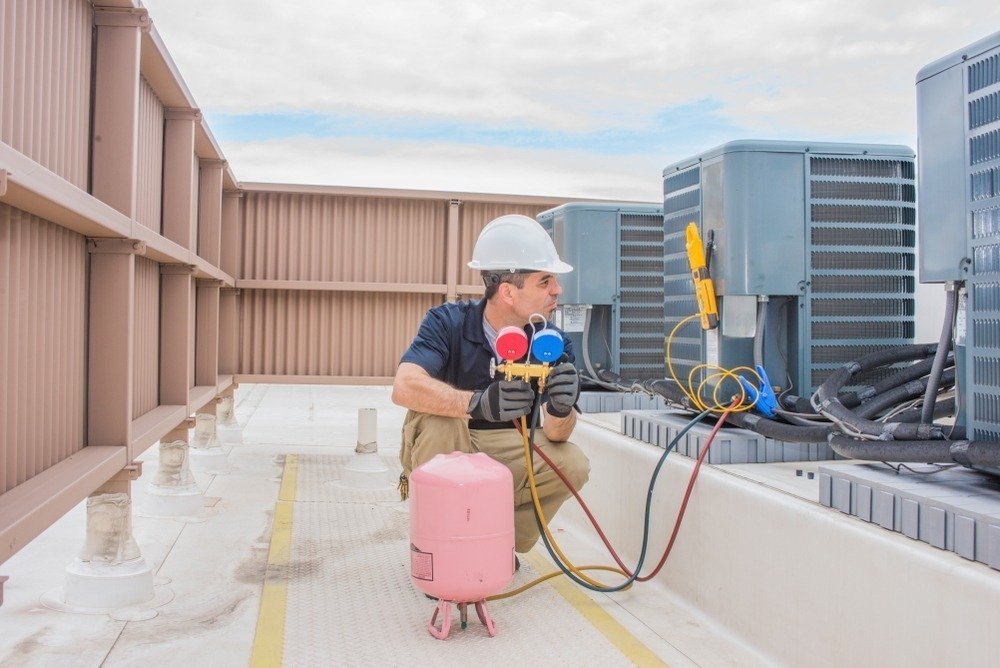
The End of R-22 and the Rise of MO99
Are you looking for an accurate mo99 pt chart to help you charge an older air conditioning system? You have come to the right place.
The era of R-22 (Freon) is officially over. Due to strict federal EPA phaseout regulations, manufacturing or importing virgin R-22 is completely banned in the United States. As a result, the cost of reclaimed R-22 has skyrocketed.
When you arrive at a residential or commercial service call and find a 15-year-old R-22 system with a massive leak, topping it off with R-22 is rarely the most cost-effective choice for the customer.
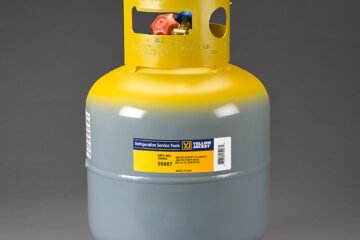
Instead, professional technicians are turning to drop-in replacements. The most popular and reliable option on the market today is Freon™ MO99 (also known by its ASHRAE designation, R-438A).
However, charging a system with a blended refrigerant is entirely different from charging with a pure refrigerant. You cannot use your old rules of thumb. In this 2026 technical guide, we will provide you with a reliable pressure-temperature reference, explain the dangers of temperature glide, and show you exactly how to retrofit an aging system.
📊 Test Your Troubleshooting Logic
Do you know the required recovery vacuum levels for an R-22 retrofit? Verify your baseline EPA 608 knowledge before you touch a live system.
The Official MO99 PT Chart (R-438A)
Unlike R-22, MO99 is a zeotropic blend. This means it is made up of several different refrigerants mixed together. Because these chemicals boil at slightly different temperatures, the refrigerant experiences “temperature glide.”
When looking at a pt chart for mo99, you will notice there are two columns for pressure at any given temperature: Liquid (Bubble Point) and Vapor (Dew Point).
(Note: In the field, you might see technicians mistakenly search for an “m099 pt chart” with a zero instead of an ‘O’, but they both refer to the exact same R-438A Freon product).
Copy or screenshot this mo99 pressure temperature chart for your next service call:
| Temp (°F) | Liquid (Bubble) PSIG | Vapor (Dew) PSIG |
| 30° | 62 | 53 |
| 35° | 69 | 60 |
| 40° | 77 | 68 |
| 45° | 86 | 76 |
| 50° | 95 | 85 |
| 75° | 151 | 137 |
| 85° | 179 | 164 |
| 95° | 210 | 194 |
| 105° | 244 | 227 |
| 115° | 282 | 264 |
How to Use the MO99 Pressure Temperature Chart
If you just look at the numbers above without knowing how to apply them, you will improperly charge the customer’s equipment.
Because of the temperature glide we mentioned earlier, you have to use specific columns depending on what part of the system you are testing.
Calculating Superheat (Use the Vapor / Dew Point)
When you are checking the charge on the low side (the thick, insulated suction line), you are verifying that all the liquid has boiled off into a vapor.
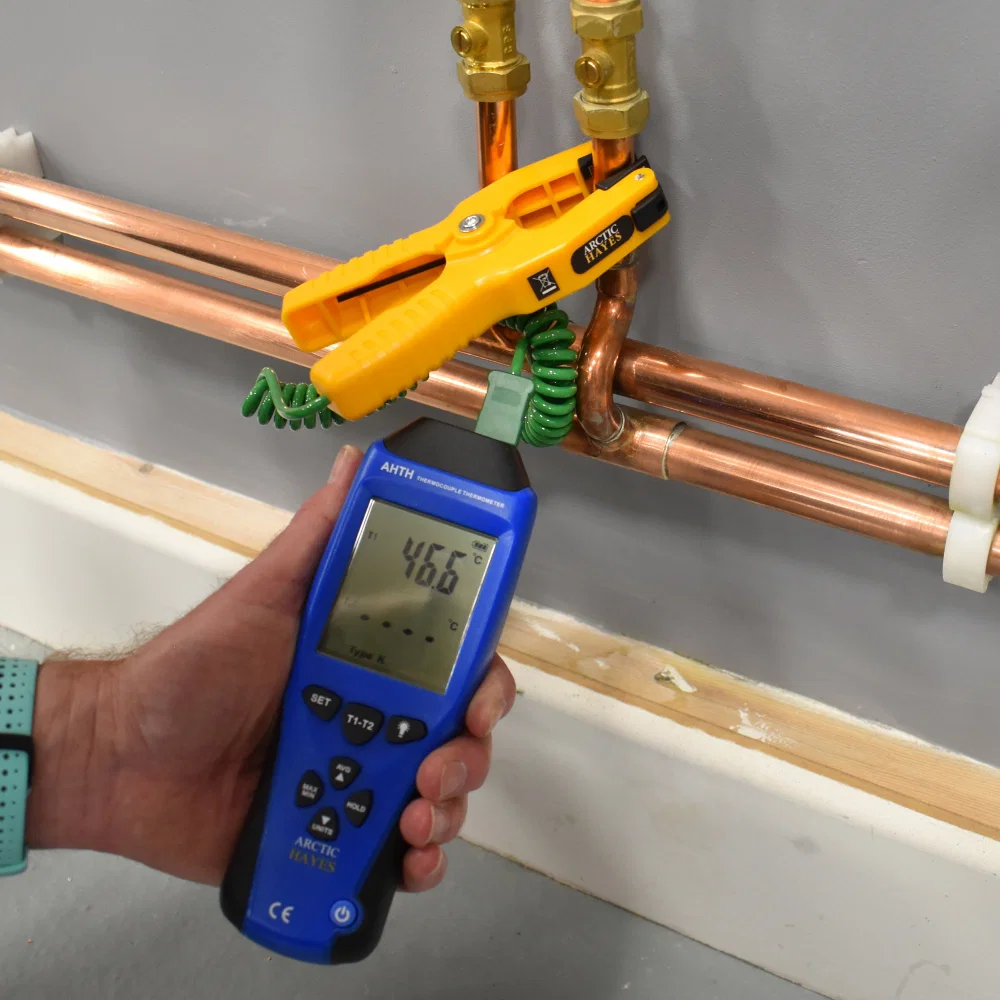
- The Rule: Always use the Vapor (Dew Point) column on the mo99 pt chart to find your saturation temperature. Subtract this number from your actual suction line temperature to find your Superheat.
Need a refresher on the math? Read our Complete Guide on How to Calculate Superheat.
Calculating Subcooling (Use the Liquid / Bubble Point)
When you are checking the charge on the high side (the thin, warm liquid line), you are verifying that the refrigerant has condensed completely into a liquid before it hits the TXV (Thermostatic Expansion Valve).
- The Rule: Always use the Liquid (Bubble Point) column on your r438a pt chart to find the saturation temperature. Subtract your actual liquid line temperature from this number to find your Subcooling.
Rules for Retrofitting an R-22 System to MO99
You cannot simply mix MO99 into a system that still contains R-22. That creates a volatile “Frankenstein” blend that will wreck system pressures and destroy the compressor.
If you want to perform a professional retrofit, follow these mandatory steps:
1. Recover the Existing R-22
According to EPA 608 regulations, you must use a certified recovery machine to pull all the existing R-22 out of the system. Recover the gas into a dedicated, color-coded recovery cylinder.
2. Replace the Filter Drier and Schrader Cores
Do not skip this step. A 15-year-old filter drier is likely saturated with moisture and acid. Cut out the old liquid line filter drier and braze in a new one. This is also the perfect time to replace leaking Schrader valve cores to prevent future callbacks.
3. Pull a Deep Vacuum
Attach your vacuum pump and electronic micron gauge. Pull the system down to at least 500 microns to ensure all non-condensables and moisture are completely boiled out of the copper lines.
4. Charge as a Liquid Only
This is the most critical step when dealing with blended refrigerants.
If you charge an R-438A system using vapor, the different chemicals inside the tank will separate. The lighter gases will enter the system first, ruining the chemical composition.
You must turn the MO99 cylinder upside down and charge it as a liquid. You will throttle the liquid slowly into the suction side using your manifold valves to prevent slugging the compressor.
🛠️ Master the Refrigeration Cycle
Do you know what happens to system pressures when a TXV fails closed? Don’t guess. Practice advanced diagnostic scenarios now.
Oil Compatibility: Mineral Oil vs. POE Oil
One of the main reasons MO99 is so popular is its compatibility with older lubricants.
Old R-22 systems used Mineral Oil (MO) or Alkylbenzene (AB) oil inside the compressor. Most modern refrigerants (like R-410A) require Polyolester (POE) oil. If you mix the wrong oil with the wrong refrigerant, it will not circulate, causing the compressor to burn out.
Fortunately, MO99 is designed to carry Mineral Oil back to the compressor effectively. In most residential split systems, an oil change is not required when retrofitting to MO99, which saves you hours of labor.
Frequently Asked Questions (FAQ)
Q: Can I use a standard mo99 pressure temp chart to charge by Subcooling?
A: Yes, but you must make sure you are looking at the “Liquid” or “Bubble Point” column on the chart to find your saturation temperature for the high side.
Q: Will the system lose capacity after retrofitting to MO99?
A: Typically, you can expect a slight drop in cooling capacity (around 5% to 10%) compared to virgin R-22. However, for most homeowners, this drop is unnoticeable on a day-to-day basis.
Q: Do I need to recover the old refrigerant, or can I just top it off?
A: You absolutely must recover the old R-22. Mixing R-22 with MO99 creates a dangerous, unpredictable chemical mixture that violates EPA laws and will destroy the equipment.
Conclusion: Avoid the Costly Callbacks
Retrofitting an aging air conditioner is a massive responsibility. If you rely on guesswork, you will ruin the compressor and guarantee an angry callback from the customer in the middle of a heatwave.
Save this mo99 pt chart to your phone, memorize the difference between bubble and dew points, and always charge blended refrigerants as a liquid.
Want to elevate your skills from a “Parts Changer” to a Master Technician?
The highest-paid technicians in the industry rely on rock-solid fundamentals. Whether you are studying for your NATE Certification or just want to become a sharper diagnostician, testing yourself is the only way to grow.
📱 Prep Smart, Troubleshoot Faster
Access 1,500+ updated questions covering complex Air Conditioning scenarios, thermodynamics, and EPA regulations. Start practicing directly in your browser.

0 Comments