The Best R123 PT Chart Guide: Low-Pressure Chiller Diagnostics
The Reality of Low-Pressure Chillers
Are you searching for an accurate r123 pt chart to diagnose a massive commercial chiller system? You are operating in a completely different league of the HVAC industry.
Most technicians spend their entire careers working on residential split systems or commercial rooftop units. Those systems operate under high pressure. If there is a leak, the refrigerant forcefully sprays out into the atmosphere.
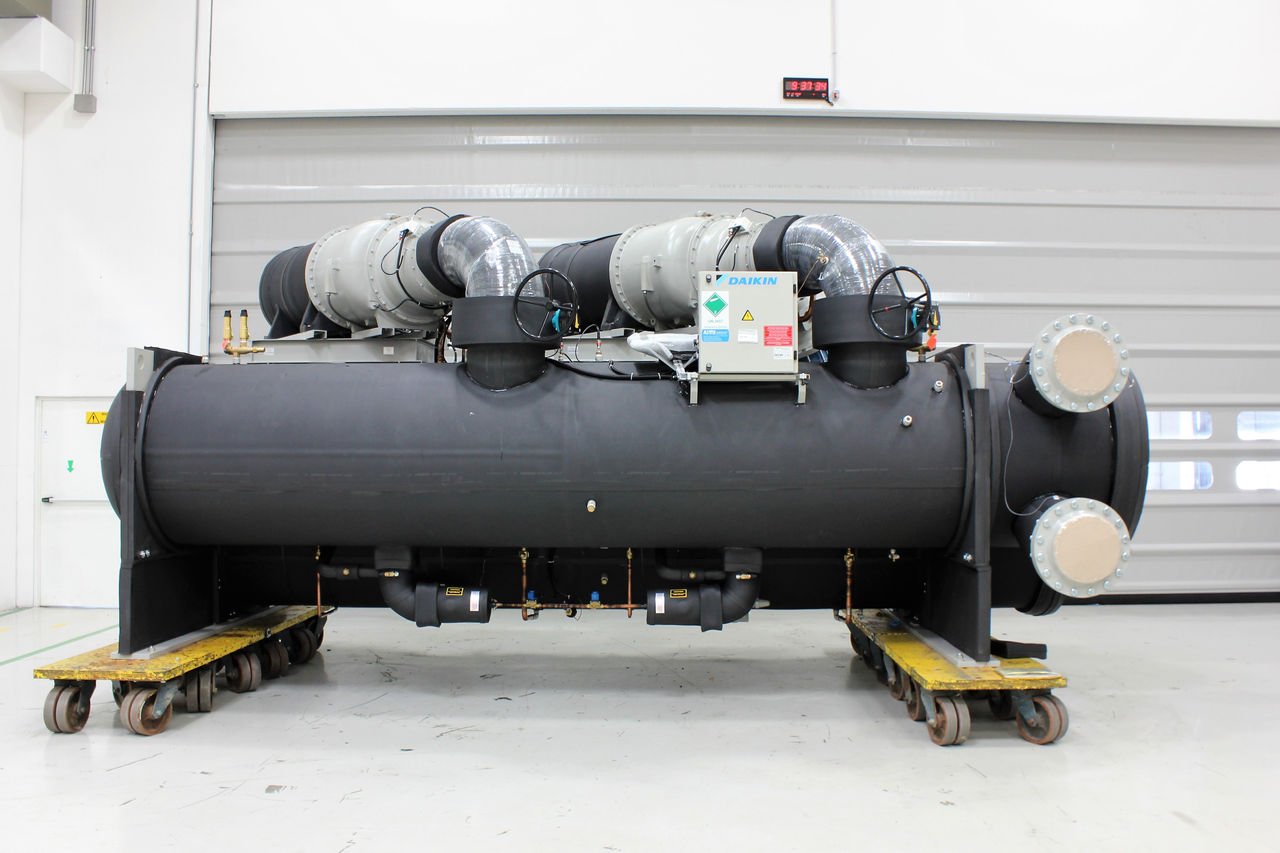
However, if you are working in a skyscraper, a hospital, or a massive university campus, you will eventually encounter low-pressure centrifugal chillers running on HCFC-123. These systems are massive, incredibly expensive, and they operate under a completely different set of physical laws.
Instead of operating under high pressure, the evaporator side of an R-123 chiller operates in a deep vacuum. If you do not understand how to read a low-pressure chart, you will misdiagnose the system and potentially cause tens of thousands of dollars in damage. In this 2026 guide, we will give you the exact reference numbers you need, explain the bizarre physics of low-pressure diagnostics, and show you how this applies to your federal certifications.
📊 Test Your Chiller Knowledge
Low-pressure systems follow completely different rules. Take a quick diagnostic quiz to see if your EPA Type III knowledge is up to standard.
The Official R123 Pressure Temperature Chart
When dealing with R-123, you must pay incredibly close attention to your manifold gauge’s units of measurement.
Unlike R-410A which is measured in PSIG (Pounds per Square Inch Gauge), the low side of an R-123 system is measured in inches of Mercury vacuum (inHg).
Older technicians who worked on legacy systems might remember using an r11 pressure temperature chart. R-11 was the original low-pressure king before it was banned for ozone depletion. R-123 was designed as its replacement, and they operate at very similar vacuum levels.
Bookmark this essential r123 pt chart for your next commercial service call. Notice how the temperatures drop into a vacuum (represented by “inHg”) on the low end.
| Temp (°F) | R-123 Pressure | Temp (°F) | R-123 Pressure | |
| 20° | 22.0 inHg | 70° | 8.8 inHg | |
| 30° | 20.1 inHg | 80° | 5.4 inHg | |
| 40° | 18.1 inHg | 90° | 1.4 inHg | |
| 50° | 15.3 inHg | 100° | 3.1 PSIG | |
| 60° | 12.3 inHg | 110° | 6.1 PSIG |
As you can see on this pt chart r123, at a standard evaporator temperature of 40°F, the system is operating at a deep 18.1 inches of vacuum. It does not hit positive pressure (PSIG) until the refrigerant reaches roughly 85°F.
Operating in a Vacuum: Why R-123 is Different
The fact that the evaporator operates in a vacuum completely changes how you troubleshoot the machine.
If a high-pressure system (like a rooftop package unit) gets a hole in the copper line, the refrigerant leaks OUT into the atmosphere.
If an R-123 low-pressure chiller gets a hole in a gasket or O-ring, the refrigerant does not leak out. Instead, the vacuum sucks ambient air and moisture IN to the machine.
This is a catastrophic problem. Air is a “non-condensable” gas. If air gets sucked into the chiller, it travels to the condenser, takes up space, and causes the head pressure to skyrocket. Furthermore, if moisture gets inside, it mixes with the refrigerant oil and creates destructive acids.
The Purge Unit
Because low-pressure chillers are prone to sucking in air through tiny micro-leaks, they are equipped with a specialized device called a “Purge Unit.”
The purge unit sits at the top of the condenser. Its only job is to separate the non-condensable air from the refrigerant and vent that air outside. If you are a commercial technician and you notice the purge unit is running constantly, you immediately know you have a leak drawing air into the system.
Diagnostics: Why We Use Hot Water for Leak Testing
How do you find a leak on a system that is sucking air in? You cannot use soap bubbles on a pipe that is under a vacuum. The bubbles will just get sucked into the machine.
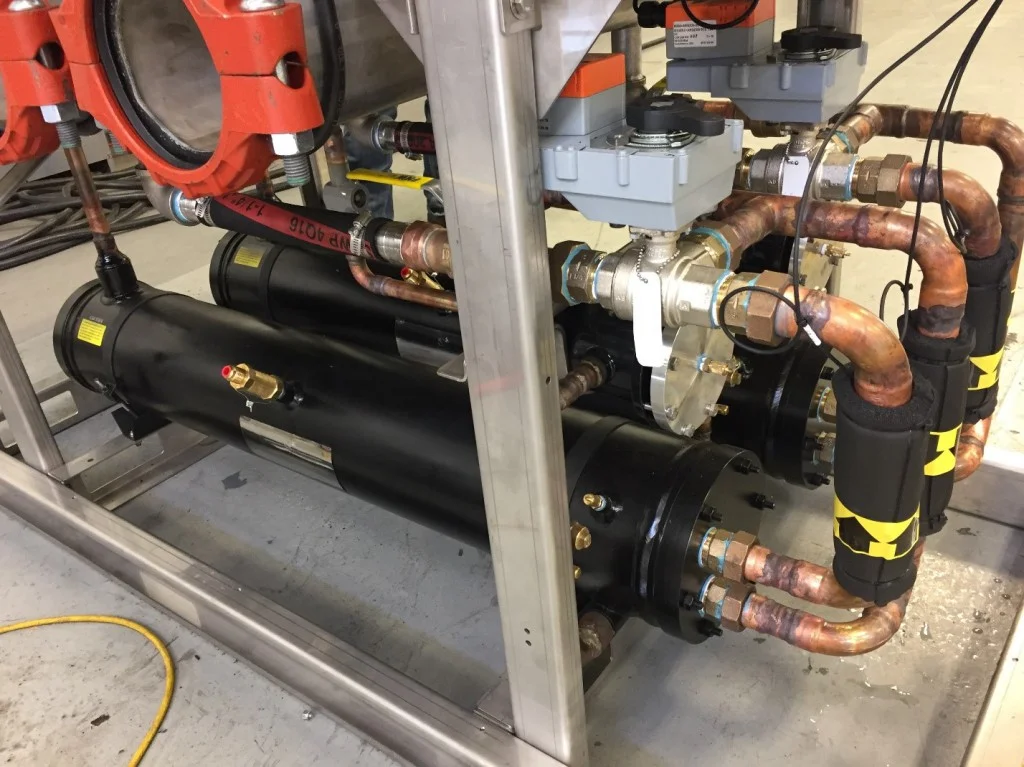
To leak test an R-123 chiller, you must raise the pressure inside the barrel until it turns into a positive pressure (above 0 PSIG).
However, you cannot just blast high-pressure nitrogen into the chiller. According to the EPA Section 608 guidelines, injecting high-pressure gas could blow the rupture disc, venting hundreds of pounds of refrigerant into the mechanical room.
The Solution: Hot Water.
By circulating warm water through the chiller barrel, you heat up the liquid R-123. If you look back at your r123 pressure temperature chart, you will see that if you heat the refrigerant past 85°F, it crosses into positive pressure (PSIG).
Once the machine hits a slight positive pressure, you can safely use an electronic leak detector or soap bubbles to find the leaky gasket without risking a rupture.
🛠️ The Hardest EPA Questions
Most technicians fail the Type III exam because they never work on low-pressure chillers. Master the hot-water leak test rules and purge unit logic with our simulator.
Passing the EPA 608 Type III Exam
If you are trying to earn your Universal Certification, the Type III section is usually the biggest roadblock.
A residential technician can easily guess their way through Type I and Type II questions based on field experience. But because low-pressure physics are so incredibly counter-intuitive, guessing on Type III will result in an immediate failure.
You must memorize the specific vacuum levels required for recovery. For example, recovering R-123 from a chiller requires pulling a deep vacuum to 25 mm Hg absolute before opening the system for repair.
You also need to understand the function of the rupture disc, which typically bursts at a very low pressure of 15 PSIG to prevent the massive chiller barrel from exploding.
Resource: Before you pay a proctor fee, read our complete EPA 608 Practice Test Guide to ensure you understand all four sections of the exam.
The Phase-Out: What is Next for R-123?
Just like R-11 before it, R-123 is currently being phased out by the federal government because it is an HCFC with ozone-depleting potential.
While you cannot manufacture new R-123 chillers, there are thousands of these massive units still operating in basements across America. Because a commercial chiller has a lifespan of 20 to 30 years, technicians will be servicing and retrofitting R-123 systems well into the 2030s.
When these systems are finally replaced, manufacturers are transitioning to next-generation HFO refrigerants, such as R-1233zd, which operate under similar low-pressure characteristics but with an ultra-low global warming impact.
Conclusion: Master the Commercial Big Leagues
Understanding an r123 pt chart is your ticket into the highest-paying echelon of the HVACR trade.
Commercial facilities pay top dollar for union and non-union mechanics who know how to safely navigate the bizarre physics of a machine that operates in a vacuum. If you want to increase your HVAC salary, mastering centrifugal chillers is the way to do it.
Don’t let the fear of unfamiliar equipment stop you from earning your Universal card. The laws of physics do not change, they just look different on a low-pressure gauge.
Ready to conquer the hardest certification exam?
Stop relying on outdated PDF manuals. Train your brain to handle commercial low-pressure scenarios before you sit for your federal test.
📱 Turn Downtime Into Study Time
Access 1,500+ updated questions covering the exact low-pressure topics found on the EPA 608 Type III exam. Start practicing directly in your browser.

0 Comments