The Best R744 Pressure Temperature Chart: CO2 Safety Guide (2026)
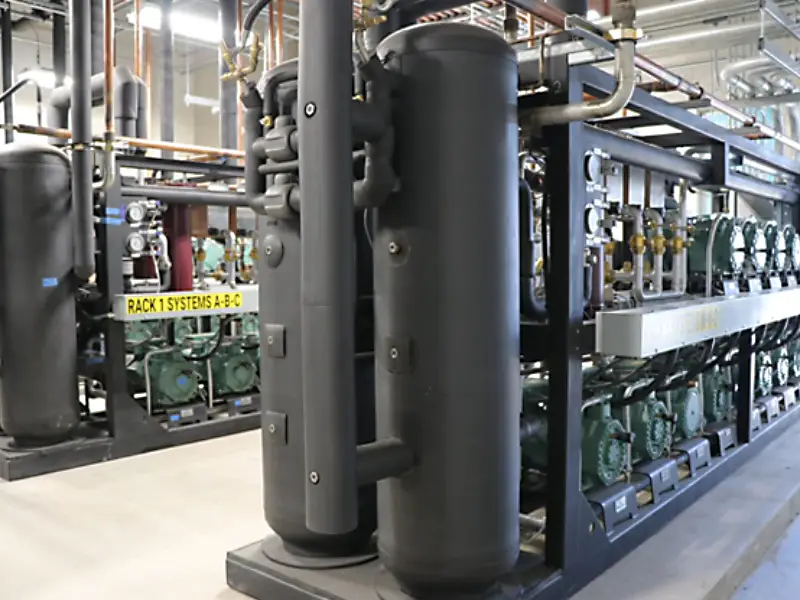
Why You Need an R744 Pressure Temperature Chart
Are you looking for an accurate r744 pressure temperature chart before you hook your gauges up to a commercial supermarket rack system? You are making a very smart and potentially life-saving decision.
If you are a traditional HVAC technician used to working with R-22 or R-410A, you need to completely reset your brain. R-744 is Carbon Dioxide (CO2). It is a “Natural Refrigerant” that is rapidly taking over the commercial sector due to its incredibly low Global Warming Potential (GWP of 1).
But there is a catch. R-744 operates at pressures that are absolutely terrifying to an untrained technician. If you use standard tools on a CO2 system, they will literally explode in your face. The high side of a CO2 system can easily exceed 1,400 PSIG on a hot summer day.
In this 2026 technical guide, we will provide you with a reliable reference chart, explain the dangerous difference between subcritical and transcritical operation, and show you why updating your safety knowledge is mandatory.
📊 Test Your Commercial Safety Knowledge
Do you know the federal regulations for handling extreme high-pressure refrigerants? Take a quick diagnostic quiz to verify your baseline EPA knowledge.
The Official R-744 Pressure Temperature Chart
Because R-744 (CO2) is a pure, single-component refrigerant, you do not have to worry about temperature glide (bubble vs. dew points) like you do with 400-series blends.
However, you must pay extreme attention to the pressure scaling. Keep this r744 pressure temperature chart handy when diagnosing commercial cooling cases.
(Pro Tip: Bookmark this page so you always have a quick co2 pt chart on your phone when standing in a freezing supermarket mechanical room).
| Temp (°F) | R-744 Pressure (PSIG) | Temp (°F) | R-744 Pressure (PSIG) | |
| -40° | 131 | 30° | 490 | |
| -30° | 161 | 40° | 553 | |
| -20° | 196 | 50° | 622 | |
| -10° | 236 | 60° | 699 | |
| 0° | 281 | 70° | 783 | |
| 10° | 332 | 80° | 875 | |
| 20° | 388 | 87.8° | 1055 (Critical Point) |
Subcritical vs. Transcritical Operation
If you look closely at the r744 pressure temperature chart above, you will notice it stops at 87.8°F. This is not a typo.
This is the most important concept an HVAC technician must understand about CO2 systems.
The Critical Point
At exactly 87.8°F (and 1055 PSIG), R-744 reaches its “Critical Point.” At this temperature and pressure, there is no longer a physical difference between liquid and vapor. The refrigerant becomes a supercritical fluid.
Because of this, an r744 pt chart is essentially useless for checking the high side of the system on a hot summer day.
Subcritical Mode
In the winter, or when the outdoor ambient temperature is cool enough, the condenser acts like a normal AC condenser. The CO2 condenses back into a liquid. During this phase, you can use your r744 pressure temperature chart to calculate subcooling just like a normal system.
Transcritical Mode
In the summer, when the outdoor temperature pushes the system past 87.8°F, the system enters “Transcritical Mode.” The condenser is now called a “Gas Cooler.” The CO2 does not condense into a liquid; it simply cools down as a dense gas.
In this mode, you cannot measure subcooling. The system relies entirely on advanced electronic expansion valves (EEVs) and complex building automation software to manage the load.
Related reading: Transitioning into commercial work? Brush up on your electrical diagnostics with our Electrical Troubleshooting Guide.
Extreme Safety Warnings for CO2 Systems
You cannot approach a CO2 system with the same tools you use for a residential heat pump. The pressures are lethal.
According to OSHA chemical and pressure hazard standards, working with R-744 requires specialized, heavy-duty equipment.
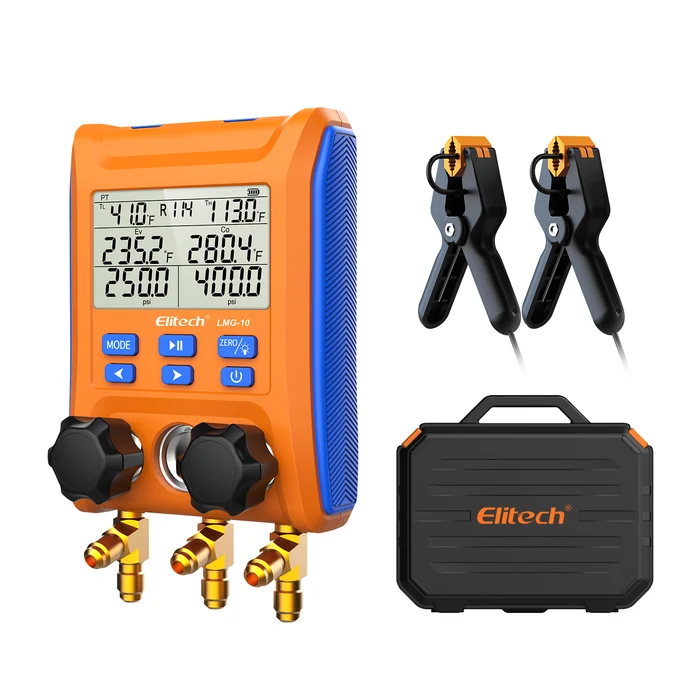
- Never Use Standard Gauges: Your standard R-410A manifold gauges will blow apart. You must use specialized CO2-rated gauges that can handle up to 2000 PSIG on the high side.
- Trapped Liquid is a Bomb: R-744 has a massive expansion rate. If you trap liquid CO2 between two closed valves without a pressure relief device, the liquid will expand as it warms up and literally blow the copper pipe apart like a grenade.
- Dry Ice Formation: If you vent liquid CO2 to atmospheric pressure too quickly, it drops below its triple point and instantly turns into solid dry ice. This will block your hoses and valves, creating a dangerous pressure trap.
🛠️ Don’t Guess on Commercial Systems
Commercial certifications will test your knowledge of advanced thermodynamics. Practice calculating superheat and subcooling in our interactive simulator.
Federal Exams and Natural Refrigerants
The HVAC industry is rapidly moving away from synthetic chemicals. The federal EPA phase-down of HFCs means that Natural Refrigerants (like CO2, Propane, and Ammonia) are the future of the commercial sector.
If you are planning to take your federal exams in 2026, be prepared.
The EPA has heavily updated the testing pools to include questions about the safe handling, storage, and recovery of high-pressure and flammable refrigerants.
If you are a commercial technician holding a Type II or Type III certification, you must understand the difference between standard recovery and CO2 venting protocols. Using an outdated study guide is the fastest way to fail the modern exam.
Resource: Make sure your federal knowledge is up to date. Review our complete EPA 608 Practice Test Guide before stepping onto a commercial job site.
Conclusion: Respect the Pressure
If you want to secure a top-tier salary as a commercial refrigeration mechanic, mastering R-744 is no longer optional. Supermarkets across North America are retrofitting their old racks with CO2 to meet environmental mandates.
But you must respect the physics.
Using an r744 pressure temperature chart correctly is just the first step. You must understand transcritical cycles, invest in specialized high-pressure gauges, and never trap liquid refrigerant between valves.
Ready to become an irreplaceable diagnostic expert?
Don’t wait until you are staring at a 1500 PSI gauge to realize you forgot how the refrigeration cycle works.
📱 Ace Your Industry Certifications
Access 1,500+ updated questions covering the exact topics found on the EPA 608 and NATE commercial exams. Build your confidence and pass today.

0 Comments