The Best Trade Schools in New Orleans, Memphis & Richmond: Beating Deep South Humidity
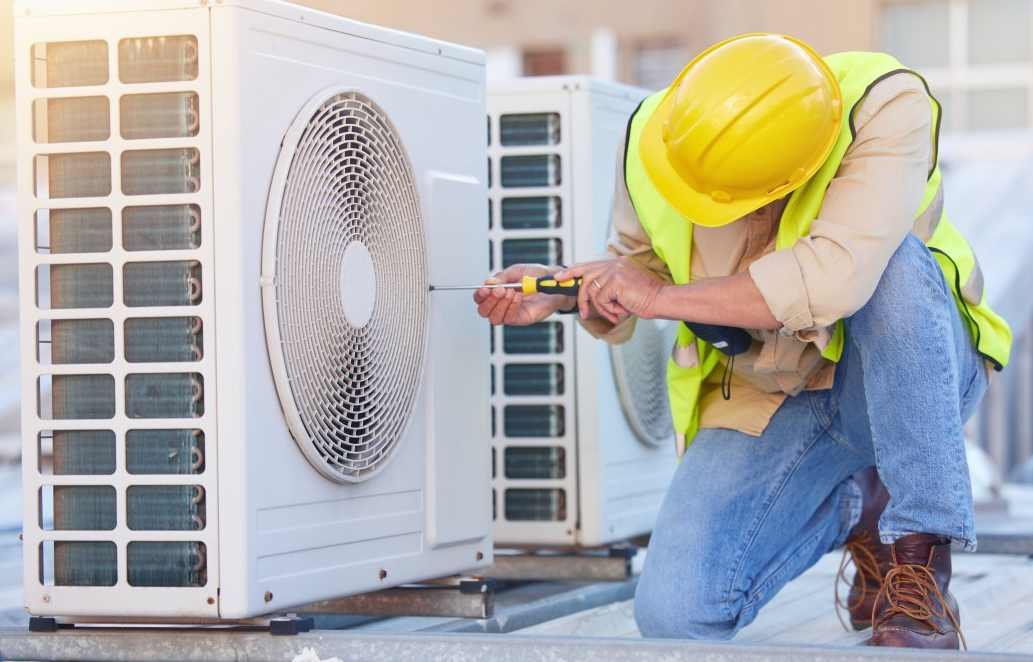
Surviving the Swamp: HVAC in the Deep South
Are you researching the best trade schools in new orleans to start your career in the skilled trades? Working in the Deep South and along the Gulf Coast is a completely different ballgame compared to the rest of the country.
When you work in states like Louisiana, Tennessee, or Texas, you are not just a temperature controller. You are a moisture remover. You are the frontline defense against mold, mildew, and structural rot.
The heat in the South is legendary, but it is the extreme humidity that destroys equipment and makes customers miserable. An air conditioner that is slightly oversized in Arizona might work fine, but if you install an oversized unit in the Deep South, it will short-cycle, failing to remove the humidity and turning the customer’s house into a damp, moldy cave.
In this 2026 guide, we will explore what you must look for when evaluating technical programs in these high-humidity regions. We will break down the advanced thermodynamics you must master, and how to pass the rigorous exams required to command a top-tier HVAC salary in these markets.
📊 Test Your Humidity Knowledge
Do you know the difference between sensible heat and latent heat? Take a quick diagnostic quiz to see if you are ready for the Southern HVAC market.
The Science of the Swamp: Sensible vs. Latent Heat
Before you spend a dime on tuition, you need to understand what makes these regions so difficult for technicians.
When you research any HVAC program, you must ask the instructors how heavily they focus on Psychrometrics (the study of moist air). This is the absolute core of Southern HVAC.
You will be dealing with two types of heat:
- Sensible Heat: The heat you can feel and measure with a standard thermometer (the temperature dropping from 80°F to 70°F).
- Latent Heat: The hidden heat absorbed or released when water turns into vapor or vapor turns into water (humidity).
In a humid market, up to 50% of an air conditioner’s energy is spent just wringing the water out of the air (removing latent heat) before it even begins to lower the actual temperature of the room. If your school does not teach you how to use a digital psychrometer to measure wet-bulb temperatures, you will fail in the field.
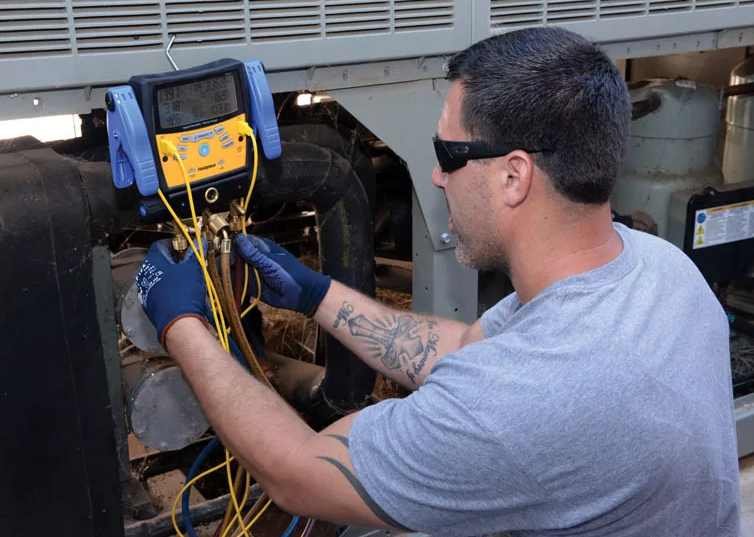
Coastal Challenges: New Orleans & Corpus Christi
If you are looking at trade schools in new orleans or exploring trade schools in corpus christi tx, you are entering the “Coastal Extreme” zone.
These areas face two unique threats: catastrophic hurricanes and relentless salt air corrosion.
When evaluating schools in these Gulf Coast cities, you must look for programs that teach advanced coil protection and disaster recovery.
- Corrosion Control: Condenser coils near the ocean can rot away in just a few years. You must learn about coastal coatings and specific maintenance routines to prevent galvanic corrosion.
- Dehumidification Systems: Standard AC units are not enough here. The best technicians in New Orleans and Corpus Christi are experts in installing and servicing Whole-Home Dehumidifiers and variable-speed inverter systems that run constantly at low speeds to wring out moisture.
Inland Humidity: Memphis & Richmond
Perhaps you are further inland, researching trade schools in memphis tn or looking into trade schools richmond va. You don’t have the salt air, but you have the oppressive, stagnant “river valley” humidity.
In these markets, Indoor Air Quality (IAQ) is a massive business. Because homes are sealed tight for energy efficiency, trapped moisture leads instantly to mold.
Top-tier programs in Memphis and Richmond will focus heavily on ductwork design. If ductwork is sized incorrectly or leaks conditioned air into a hot attic, the condensation will cause ceilings to rot. You must learn how to perform strict Manual J (load calculation) and Manual D (duct design) assessments to ensure the system breathes correctly.
According to the ASHRAE standards, maintaining proper indoor humidity is a strict requirement for public health and building safety.
The Booming Hub: Charlotte, North Carolina
If you are looking at trade schools in charlotte nc, you are looking at one of the fastest-growing corporate and financial hubs in the Deep South.
Charlotte is unique because it blends the oppressive Southern heat with massive commercial infrastructure. Data centers, high-rise banks, and expanding suburbs mean there is a massive demand for both residential and commercial technicians.
If you plan to work in Charlotte, your education needs to cover both the high-efficiency residential heat pumps required for the humid summers, and the advanced Building Automation Systems (BAS) that control the climate in downtown skyscrapers.
Related Resource: Want to know what your license allows you to do? Read our Journeyman License Guide.
🛠️ Don’t Fail the NATE Psychrometrics Exam
Latent heat and wet-bulb calculations are the #1 reason techs fail their certification exams. Practice these exact scenarios now.
The Federal Law You Cannot Escape
Regardless of which southern city you choose to train in, there is one federal hurdle that unites every technician in the United States.
Before you can legally hook up a manifold gauge to an air conditioner, you must pass the EPA Section 608 Certification.
The Environmental Protection Agency makes it illegal to handle regulated refrigerants without this card. Because Southern technicians deal almost exclusively with heavy air conditioning loads, handling massive amounts of refrigerant is a daily task.
Do not wait for your trade school to teach you this. The smartest technicians study for and pass their EPA Universal exam on their own before they even finish school. Walking into a job interview with your EPA card already in your wallet proves you are ready to work immediately.
Resource: Check out our complete EPA 608 Study Hub to learn exactly what is on the exam.
H2: Conclusion: Master the Moisture, Master the Trade
Working in the Deep South is not for the weak. The attics are brutal, the days are long, and the equipment works incredibly hard.
But if you choose the right program among the trade schools in new orleans, Memphis, or Charlotte, you will learn a skill set that makes you irreplaceable.
Anyone can swap out a broken part. But a technician who understands psychrometrics, who knows how to properly size a system to remove latent heat, and who can save a homeowner from a mold infestation—that technician can name their own price.
Ready to start your journey?
Don’t wait until you are sitting in a sweltering classroom to realize you don’t understand thermodynamics. Start mastering the theory right now.
📱 Ace Your Federal Certifications
Access 1,500+ updated questions for the EPA 608 and NATE exams directly in your browser. Get certified and get hired faster.

0 Comments