The Honest Truth: Will Vinegar Damage My Indoor Evaporator Coil?
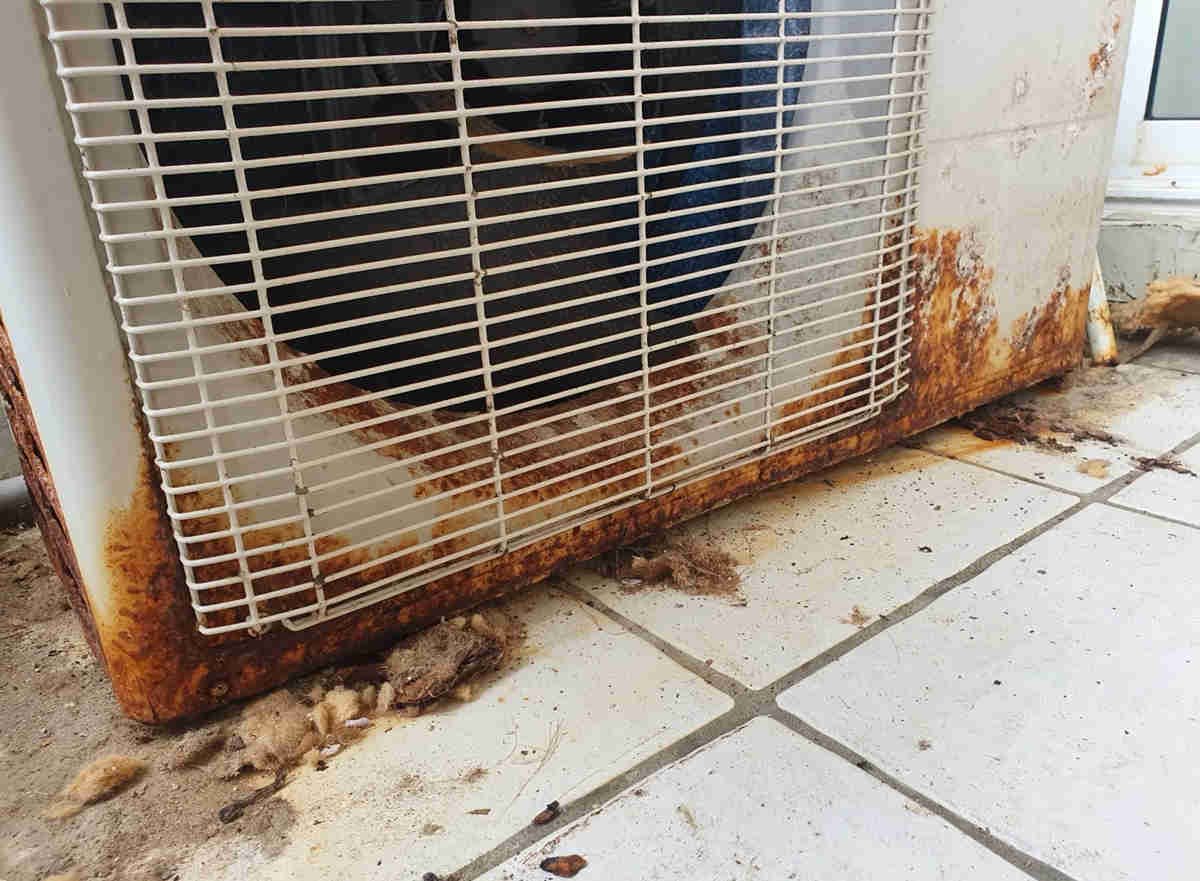
The DIY Cleaning Trap: Proceed with Caution
Summer is approaching, and your air conditioner has started to smell like a dirty locker room. You open the air handler, see a layer of grime on the metal fins, and immediately head to Google. You find dozens of “DIY home hack” blogs telling you to mix water and vinegar in a spray bottle. But before you pull the trigger, a smart question pops into your head: will vinegar damage my indoor evaporator coil?
You have come to the right place for a professional answer.
Whether you are a homeowner trying to save a few bucks on an AC tune-up, or a green HVAC apprentice (PM Tech) tasked with cleaning coils on your first day, understanding the chemistry of your equipment is vital.
Air conditioning coils are highly sensitive, pressurized components. Using the wrong household condiment on them can result in thousands of dollars in property damage. In this technical guide, we will give you the brutal truth about acidic cleaners, explain the science of coil corrosion, and show you how the professionals actually clean a system.
📊 Test Your HVAC Chemistry
Do you know how different chemicals react with copper and aluminum? Take our quick diagnostic quiz to test your mechanical and safety knowledge.
The Short Answer: Yes, Vinegar Can Cause Major Damage
So, will vinegar damage my indoor evaporator coil? The definitive, industry-standard answer is: Yes, it absolutely can.
To understand why, you have to look at what vinegar actually is. Household white vinegar contains acetic acid. While it is a fantastic, natural cleaner for your kitchen sink or your coffee maker, your HVAC equipment is not a kitchen appliance.
Most indoor evaporator coils are constructed using a combination of copper tubing and thin aluminum fins. Some modern high-efficiency units use all-aluminum coils.
Metals like copper and aluminum are highly reactive to acids. When you spray acetic acid (vinegar) directly onto these thin metals and leave it there, a chemical reaction begins. Over time, the acid eats away at the protective coating of the metal, leading to microscopic degradation.
The Silent Killer: Formicary Corrosion Explained
If you ask a veteran HVAC technician, “Why is vinegar so bad?”, they will point you to the most dreaded phrase in the air conditioning industry: Formicary Corrosion.
Formicary corrosion (often called “ant’s nest corrosion”) is a specific type of decay that attacks copper tubing in HVAC units. It is caused by the presence of organic acids—specifically acetic acid (found in vinegar) and formic acid (found in building materials and cosmetics).
How It Destroys Your Coil
When acetic acid is introduced to a humid, dark environment like an indoor evaporator coil, it creates a chemical chain reaction.
The acid creates microscopic, tunneling pinholes through the copper walls. These tunnels look like an ant’s nest under a microscope (hence the name).
Because these pinholes are microscopic, the refrigerant leaks out very slowly. A homeowner might not notice the issue until a year later when the AC stops blowing cold air. By then, the entire coil is ruined and must be replaced, easily costing upwards of $1,500 to $2,500.
The Department of Energy heavily advises following strict manufacturer guidelines when maintaining your air conditioner to avoid causing irreparable damage to the fins and coils.
Why Homeowners and Green Techs Make This Mistake
If vinegar is so destructive, why is it recommended all over the internet?
It comes down to a misunderstanding of HVAC plumbing. Vinegar is actually excellent for cleaning PVC condensate drain lines.
A common maintenance tip is to pour a cup of white vinegar down the white PVC drain pipe to kill algae and prevent clogs. Because the pipe is made of heavy plastic, the acid does not harm it.
The fatal mistake happens when DIYers or untrained apprentices assume that if vinegar is good for the plastic drain pipe, it must be great for the metal coil. They load up a spray bottle and douse the sensitive aluminum fins, accidentally initiating formicary corrosion.
🛠️ Don’t Touch Refrigerant Blindly
If you don’t understand the chemical reactions of cleaners, you shouldn’t handle high-pressure refrigerants. Master the EPA safety codes before you ruin a system.
The Professional Way to Clean an Evaporator Coil
If you are an apprentice entering the field, or a homeowner looking for the right way to do things, you must use industry-approved methods.
Here is the standard operating procedure that professional technicians use to avoid damaging expensive equipment.
Step 1: Turn Off the Power
Always disconnect power at the breaker before opening the air handler. You are dealing with 120V or 240V electricity. Safety is your absolute first priority.
Step 2: Use a pH-Balanced Coil Cleaner
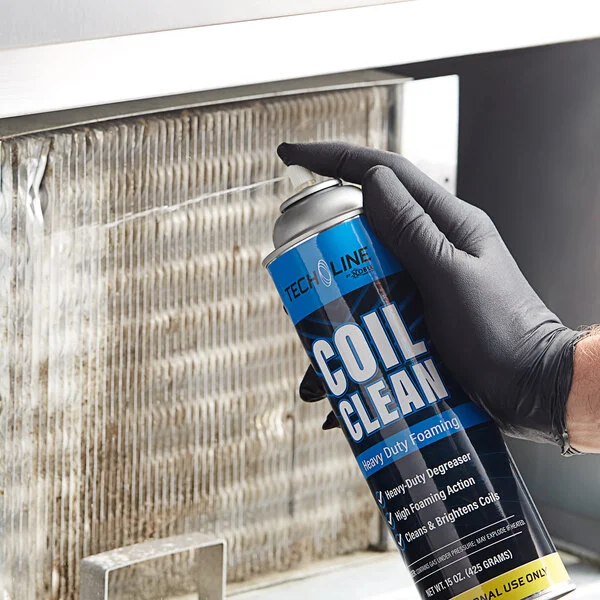
Never use kitchen condiments. Professionals use specifically formulated No-Rinse Evaporator Coil Cleaners.
These are typically sold in aerosol cans. They are mildly alkaline (not highly acidic) and are designed to foam up, pushing dirt and biological growth out from between the tight aluminum fins.
Step 3: Let the Condensation Rinse It
The beauty of a “no-rinse” foam is that you simply spray it on the coil, close the unit, and turn the AC back on.
As the warm air hits the cold coil, the unit naturally produces condensation (water). This natural sweating process gently rinses the foam and the trapped dirt down into the drain pan.
When to Call a Professional (Or Become One)
While a light spray of foaming cleaner is fine for basic maintenance, some coils are heavily impacted. If the system was operated without an air filter, or if the house has pets, the coil can become caked in a thick layer of “felt-like” debris.
In this scenario, surface cleaners will not work. A certified technician must perform a “Pump Down.”
This means they will use a recovery machine to pull the refrigerant out of the system in compliance with the EPA 608 regulations. Then, they will cut the copper lines, physically remove the entire evaporator coil from the house, and wash it outside with heavy-duty chemicals and a hose.
This requires an advanced understanding of the refrigeration cycle, vacuum pumps, and brazing.
Are you interested in learning how to do this professionally? Check out our guide on How to Become an HVAC Tech to start your career.
Conclusion: Protect Your Equipment
The next time someone asks you, “will vinegar damage my indoor evaporator coil?” you know exactly what to tell them.
Yes, it will. Acetic acid is the primary trigger for formicary corrosion, which creates microscopic pinholes in copper tubing and permanently destroys air conditioning systems.
Stick to pouring vinegar down the plastic drain line, and leave the delicate metal coils to specialized, pH-balanced commercial foaming cleaners.
Are you an apprentice trying to master the trade?
Understanding the chemistry and physics of an HVAC system is what separates a cheap handyman from a highly-paid professional. Don’t let a lack of knowledge hold your career back.
📱 Ace Your Industry Certifications
Ready to move past coil cleaning? Access 1,500+ updated questions for the EPA 608 and NATE exams directly in your browser. Master the trade today.

0 Comments