What is a PM Tech in HVAC? Salary & Duties for Maintenance Technicians
The Frontline of the HVAC Industry: What is a PM Tech?
Are you looking to break into the HVAC industry but wondering exactly what a pm tech does on a daily basis? You have come to the right place.
When you finish trade school or apply for your very first job at a local residential heating and cooling company, you probably will not be handed a service van and told to go fix complex compressor failures.
Instead, you will likely be hired as a Preventative Maintenance Technician—commonly referred to in the industry as a pm tech.
This is the absolute most common entry-level position in the trade. It is the crucial stepping stone between being a “green helper” who just carries ladders, and becoming a highly-paid Senior Service Technician.
In this 2026 guide, we will break down the brutal reality of the daily duties, the starting salary, and the exact skills you need to learn to get promoted out of the maintenance role.
📊 Are You Ready to Get Hired?
Employers expect maintenance techs to know basic safety and tool operations. Take a quick diagnostic quiz to test your baseline logic.
The Daily Duties: A Day in the Life
As a pm tech, your primary responsibility is keeping healthy equipment running efficiently, rather than fixing broken equipment.
During the spring and fall “shoulder seasons,” residential companies sell thousands of “Tune-Up” specials. You will be the one driving to 4 or 5 houses a day to perform these inspections.
Here is what your daily checklist will look like:
1. Washing Coils and Changing Filters
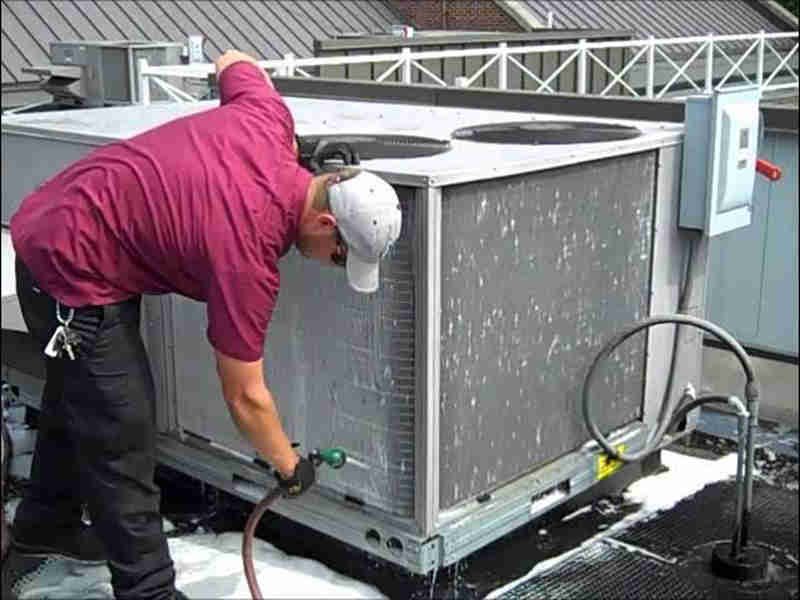
This is the physical part of the job. You will drag a garden hose to the backyard and use chemical cleaners to wash dirt, dog hair, and cottonwood out of the outdoor condenser coils.
Inside the house, you will replace 1-inch fiberglass filters or 4-inch media cabinets.
2. Testing Electrical Components
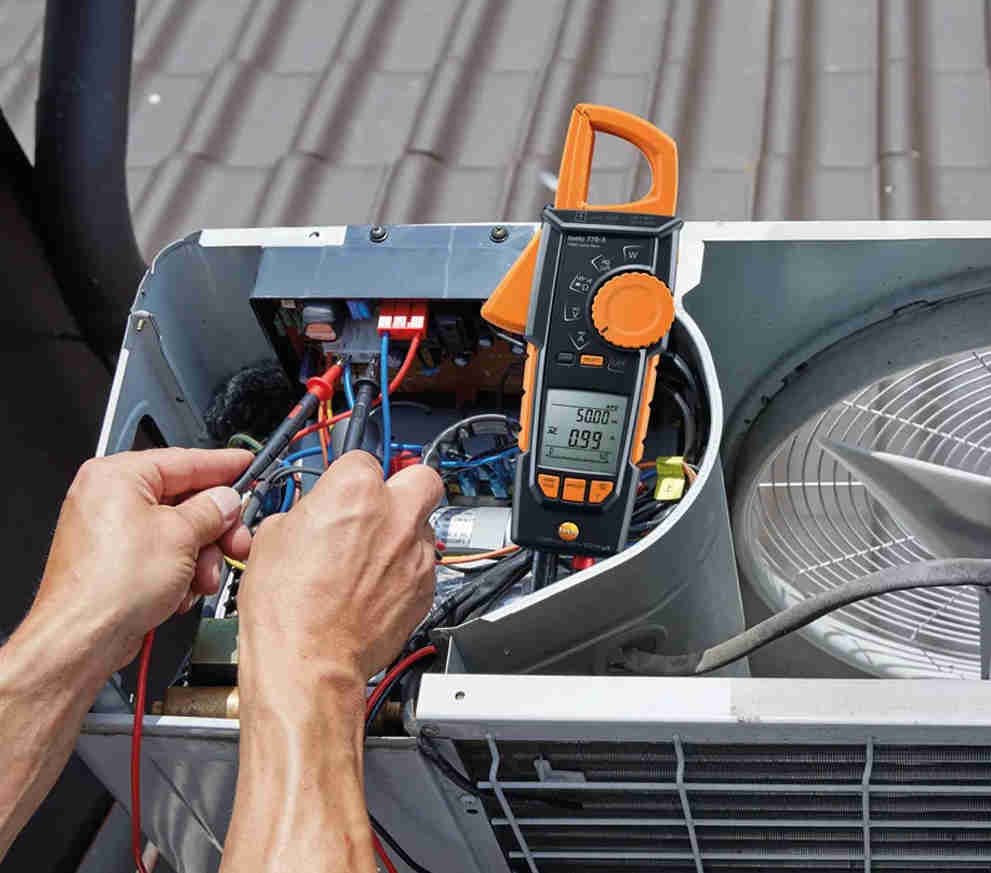
While you are not doing deep diagnostics, a good pm tech must know how to use a multimeter.
You will test the dual-run capacitor to ensure the microfarads (MFD) are within tolerance. You will inspect the contactor for pitted or burned points. You will also check the amp draw on the compressor and blower motor.
3. Checking Refrigerant Levels
You will hook up your manifold gauges to check the system pressures.
However, a strict rule for maintenance technicians is to avoid “gassing and going.” If the system is low on refrigerant, you are expected to inform the customer and potentially schedule a Senior Service Tech to perform a full leak search according to the federal EPA 608 guidelines.
4. The Sales Aspect (Lead Generation)
This is the hidden duty of the job. Companies rely on maintenance technicians to generate sales leads.
If you notice a system is 15 years old and heavily rusted, your job is to politely inform the homeowner and set up an appointment for the sales team to quote a new system. Many companies pay heavy commissions for these generated leads.
PM Tech Salary: What Can You Expect to Earn?
Because this is a stepping-stone position, the base salary is lower than that of a lead diagnostic mechanic. However, it is still a very livable wage, and you avoid the massive debt associated with 4-year colleges.
According to Bureau of Labor Statistics (BLS) data and current 2026 industry trends, here is the breakdown:
- Average Hourly Rate: $18 to $24 per hour.
- Estimated Annual Income: $38,000 to $50,000.
- Commission Upside: Many techs add $5,000 to $10,000 to their base pay through “spiffs” (bonuses) by selling UV lights, hard start kits, or generating replacement leads.
For a broader look at how much you can earn as you level up, read our complete HVAC Technician Salary Guide.
The Difference Between a PM Tech and a Service Tech
It is crucial to understand the ceiling of your job title. A pm tech performs routine maintenance. A Service Tech performs complex diagnostics.
When an air conditioner completely dies on a 105-degree Friday afternoon, dispatch does not send the maintenance guy. They send the Service Tech.
The Service Tech understands how to read complex electrical wiring diagrams. They know how to trace a low-voltage short in the attic, bypass a faulty limit switch for testing, or calculate target superheat on a fixed orifice system.
Because the Service Tech uses their brain to solve complex puzzles under extreme pressure, their pay scale is significantly higher—often reaching $35 to $50+ per hour.
🛠️ Don’t Wash Coils Forever
To get promoted to Service Tech, you must master electrical diagnostics. Practice tracing faults with our interactive simulator.
The Barrier to Entry: Getting Hired
If you want to land this entry-level position, you do not need years of experience. You simply need a good attitude, a clean driving record, and one specific federal certification.
You must pass the EPA 608 Universal Exam before an employer will let you drive their van.
Even though you are just doing maintenance, you will be attaching gauges to pressurized refrigerant lines. If you accidentally vent R-410A into the atmosphere without being federally certified, you and your company will face massive legal fines.
Do not wait for an employer to sponsor you. Study for and pass your EPA Certification on your own. Showing up to an interview with that card already in your wallet proves you have initiative.
How to Get Promoted Quickly
The biggest mistake a pm tech can make is getting comfortable. Washing coils is easy money, but it is a physical grind. If you do not actively try to upgrade your skills, you will be stuck in that role for five years.
If you want to double your paycheck, you must train your brain.
While you are driving between maintenance calls, you should be studying. Your ultimate goal during your first year should be to pass the NATE Core Certification.
The NATE exam tests your actual troubleshooting logic. When you pass that exam and hand the badge to your service manager, you send a clear message: I am ready to run service calls and solve real problems.
Conclusion: Your Stepping Stone to Six Figures
Being a maintenance technician is the right of passage for every great mechanic in the industry. It teaches you how to talk to customers, how to navigate hot attics, and how a healthy system is supposed to sound and look.
Embrace the grind. Learn how to clean a flame sensor perfectly. Learn how to spot a weak capacitor.
But never lose sight of the next level.
Ready to start training for your promotion?
Stop relying solely on your lead technician to teach you everything. You must take control of your own education.
📱 Start Earning Your NATE Badges
Access 1,500+ updated questions covering advanced electrical and thermodynamics. Prove you are ready for the Service Tech role today.


0 Comments